
Ways to Handle Negative Press About a Property Responsibly
The strongest response isn’t always the fastest one. Knowing how to handle negative press about a property starts with monitoring where coverage appears, verifying claims before replying, and deciding whether a public response will help. If you respond, acknowledge valid concerns, state verified facts, and explain what will change without turning the exchange into an argument.
It’s understandable to want to correct the record immediately when a property is criticized online. But a defensive reply can shift attention away from the concern and make a manageable issue harder to resolve. This guide explains how to monitor reviews, news, and social channels, assess the facts, and respond in a way that reflects your company’s values. You’ll also learn when to take a discussion offline, how to turn recurring complaints into practical management improvements, and why follow-up matters after the first reply. The aim isn’t to win a public argument. It’s to address the underlying issue, communicate thoughtfully, and protect trust through consistent action.
Key Takeaways
- Track coverage across reviews, social media, news, and forums so you can spot concerns and assess their reach.
- Before responding, confirm the facts and choose a message that reflects your company’s values and addresses valid concerns.
- Look for recurring complaints, fix the underlying operational issues, and follow up to show what changed.
- Keep public replies calm and factual, then move detailed or sensitive discussions to a private channel.
1. Monitoring social media, reviews, news outlets, forums, and blogs
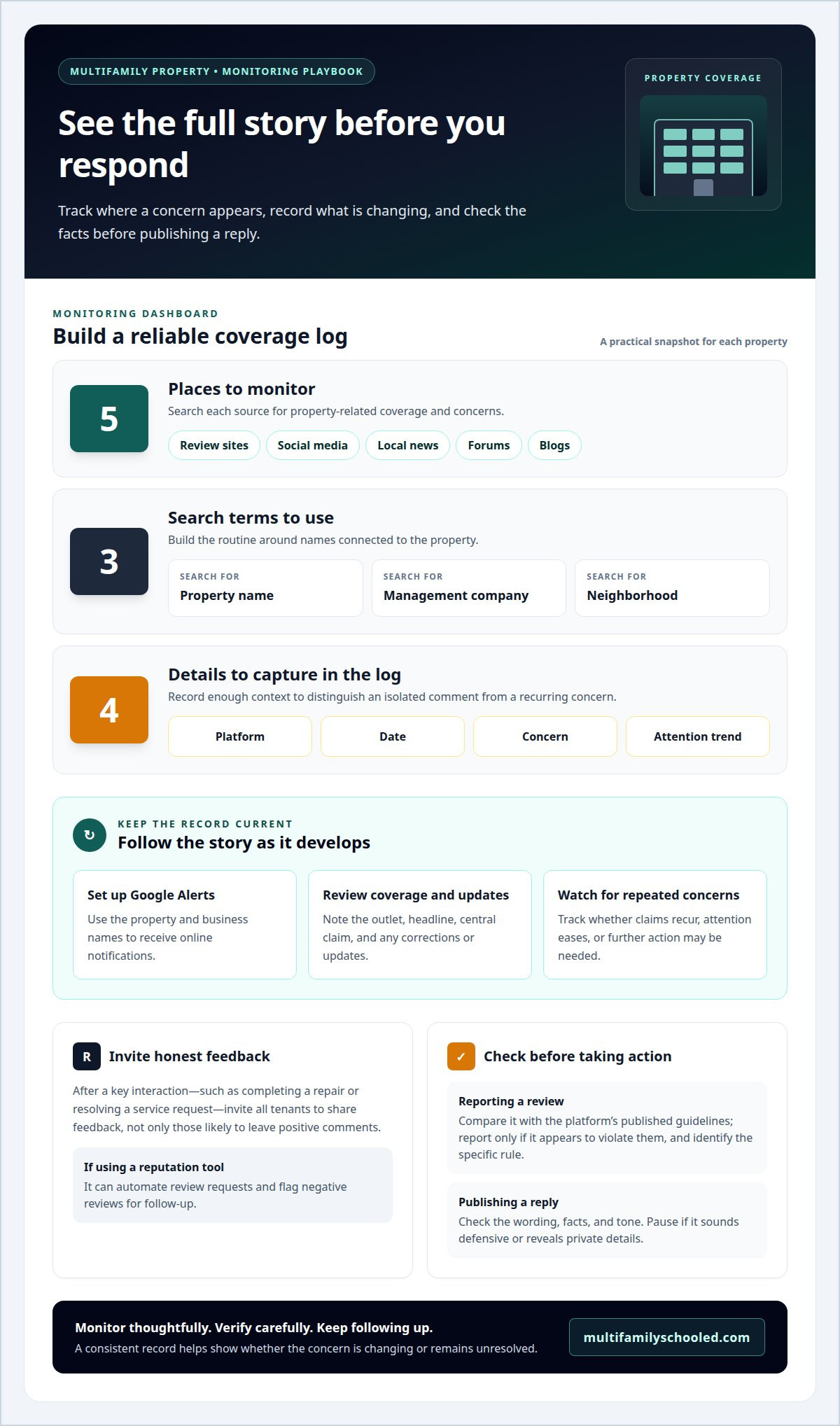
Build a monitoring routine around the property name, management company, and neighborhood. Search review sites, social media, local news outlets, forums, and blogs for each term. A complaint about delayed repairs may appear in a tenant review, then surface in a neighborhood group. Record the platform, date, concern, and whether the post is gaining attention. This log helps distinguish an isolated comment from a recurring issue.
Set up Google Alerts for the property and business names to receive notifications when they appear online. Review each alert and relevant news coverage, then record the outlet, headline, central claim, and any updates. Track coverage over time: note whether the claim is repeated, whether the story is corrected or updated, and whether new posts raise the same concern. These indicators help show whether attention is easing or further action is needed.
Use review requests thoughtfully. After key interactions, such as completing a repair or resolving a service request, invite tenants to share honest feedback. Reputation tools can automate these requests and flag negative reviews for follow-up. Invite feedback from all tenants, not only those likely to leave positive comments. A range of candid reviews gives prospective readers more context than responses focused only on praise.
Before reporting a review, compare it with the platform’s published guidelines. If it appears to violate them, use the site’s reporting process and identify the specific rule at issue. Don’t report a review simply because it’s critical. Before publishing a reply, check its wording, facts, and tone; pause if it sounds defensive or reveals private details. Careful review can prevent a rushed post from creating another story. Keep tracking results afterward, including follow-up coverage and whether the original concern appears resolved.
2. Respond authentically and consistently with company culture
Respond promptly, but don’t let speed replace fact-checking. Gather relevant records, speak with the staff involved, and agree on a clear account before issuing a statement. A tenant’s report of a missed repair calls for a different response than a news story alleging a broader pattern. Acknowledge the concern, show empathy, and explain the next step in language that reflects how the organization treats people.
Coordinate the response among property staff, leadership, and anyone handling media inquiries. Choose one spokesperson, share approved facts and key messages, and set a process for routing new questions. This helps prevent a social media reply from contradicting a statement to a journalist. A crisis plan can specify who approves messages, how affected people receive updates, and how the organization communicates regret, responsibility, reform, or restitution when appropriate.
Contact a journalist when coverage contains a specific factual error or omits information that materially changes the story. Provide concise evidence and calmly request a correction or update. Consider a public relations firm when coverage involves multiple outlets, sustained public attention, or complex stakeholder communications. Seek advice from a crisis communications attorney when allegations raise legal concerns or a response could affect a potential claim.
Public replies can create defamation and privacy risks. The California Apartment Association notes that false statements of fact published online may support claims such as libel, trade libel, or interference with business relationships. Don’t repeat an unverified allegation as fact, accuse a critic of lying, or disclose tenant details while defending the property. Keep statements factual and limited to information that is appropriate to share.
If coverage concerns a safety, environmental, or code issue, address the underlying condition first. Explain what action is underway, share relevant updates with affected people, and don’t claim the problem is fixed before it is. Then communicate verified improvements through the same channels used for the original response. Positive narratives are most credible when they show real changes, not just promotional messages.
3. Learning from complaints to improve property management
A polished public reply won’t fix a service gap. Group feedback by issue, such as unresolved repairs, unclear notices, or repeated questions about building access. Compare each report with work orders, tenant communications, and staff records. If several complaints point to the same process, assign an owner, document the corrective action, and follow up with affected tenants. This turns reputation management into operational learning.
Criticism can feel personal, especially when a manager handled the situation directly. Before replying, ask a colleague who wasn’t involved to review the complaint and proposed response. Their distance can help separate emotion from evidence. For example, if a resident says a repair request was ignored, confirm the request history and identify where communication broke down. Fix the process, not just the public wording.
Reputation management software can gather feedback from multiple platforms, flag new concerns, and help teams respond promptly. Use it to spot recurring themes, assign follow-up, and track whether the same issue appears again. Software supports the process, but people still need to verify each complaint and decide what action fits. For example, repeated reports of confusing maintenance updates may call for clearer notices and a consistent status process.
Negative coverage may affect how prospective tenants or buyers view a property and shape questions during rental or sale discussions. Coverage alone doesn’t determine a property’s value or an insurer’s decision; the underlying facts and relevant market or underwriting factors matter. Treat a reported safety or maintenance issue as a prompt to review records and address any substantiated problem. Then document the correction and see whether later feedback reflects the change. The goal is lasting improvement, not simply fewer visible complaints.
Complaints can reveal operational problems and point to ways to improve property management. If a manager is too emotionally involved to respond objectively to a negative review, a colleague who wasn’t involved can handle the response. The priority is to resolve the issue behind the review and follow up with the tenant once it’s addressed.
A crisis response should address underlying systemic issues, not just the immediate problem. Identify vulnerabilities, address mistakes with a mitigation plan, and provide follow-up evidence that commitments were met. Maintain an action plan to correct the situation and help prevent the same problem from happening again.
4. Avoiding public arguments and defensiveness
A public comment can invite a long exchange, but every reply becomes part of the property’s visible record. Before responding, separate the original concern from personal criticism and identify the specific issue that needs action. If a reviewer says a common area remains dirty, check cleaning and inspection records. Don’t answer accusations with sarcasm, blame, or claims about the reviewer’s motives. Those distract from the issue and can make the response look defensive.
Use a simple reply structure: acknowledge the concern, state only relevant facts, and offer a private way to discuss details. For example, “Thanks for raising the maintenance concern. We’d like to understand the specific location and follow up directly.” Keep tenant names, unit details, payment information, and private conversations out of public replies. A short, neutral message gives readers a clear next step without exposing personal information or inviting a point-by-point debate.
Move the detailed conversation offline through a direct message, phone call, or email. Address the reviewer’s concern, listen without interrupting, and record the agreed next step. If the person continues posting, don’t respond to every new comment. A designated spokesperson can review each update and decide whether it raises a new factual issue that needs a response. This keeps the property’s voice consistent and prevents staff from replying independently in frustration.
Set a clear stopping point. Once the organization has offered a private discussion and explained its position, repeating the same answer rarely adds useful information. Keep records of the public post, the reply, and any follow-up action. Before publishing, read the draft aloud and remove language that sounds accusatory, emotional, or dismissive. The goal isn’t to win an argument. It’s to show readers that concerns receive a measured response and meaningful attention.
When a concern can be addressed directly, consider contacting the reviewer privately by phone or email before posting a public response. This gives the property manager a chance to understand and address the issue without extending the exchange in public. If a public reply is appropriate, keep it objective, stick to facts, and avoid emotional or defensive language. Invite the reviewer to continue the discussion offline rather than debating the review publicly.
Multifamily Schooled
Multifamily Schooled helps investors build knowledge for apartment and commercial real estate decisions. Once you’ve addressed a property concern, stronger investment fundamentals can help you assess opportunities and plan for future ownership. Its Mentorship Program, Live Workshops, Online Challenges, Deal Finding Software, and Multifamily University support learning about multifamily investing. These educational resources aren’t a substitute for resolving tenant complaints or managing a property. They’re a next step for readers who want to strengthen their understanding of real estate investing alongside responsible property practices.
To explore how Multifamily Schooled’s educational resources fit your investing goals, contact Multifamily Schooled.
Build a Stronger Standard for What Comes Next
How an organization handles criticism can become part of its operating culture. Set a clear expectation: concerns deserve attention, communication should stay respectful, and commitments need follow-through. That standard helps teams make steadier decisions when public pressure returns, rather than improvising under stress.
Use what you’ve learned to prepare a simple response framework for future issues. Define who gathers facts, who speaks publicly, and how updates reach affected people. Keep it practical, then revisit it as the property and its operations change. A thoughtful approach to how to handle negative press about a property can support responsible decisions well beyond a single news cycle.
For a broader foundation in multifamily investing, explore the educational resources available through Multifamily Schooled. Contact Multifamily Schooled today to discuss your next step. Keep building your knowledge, lead with integrity, and move forward with purpose.
Frequently Asked Questions
How should property owners respond to negative press about a property?
Start by deciding who owns the response and what outcome matters: correcting a factual error, updating residents, or explaining a repair. To handle negative press about a property responsibly, keep a record of the coverage, supporting documents, decisions, and follow-up. For example, a maintenance concern may need a documented repair update, while a disputed detail may need evidence before any public statement.



