

Real Estate Investing While Working Full Time: Can It Work
Real estate investing while working a full-time job can work when you choose a manageable strategy, understand the loan requirements, and make time for rental responsibilities. A rental property may generate supplemental income with a few hours of work each week, but tenant needs, maintenance, and financial decisions still require attention. The key is building a plan that fits around your job, not assuming the investment will run itself.
It’s reasonable to wonder whether a demanding workweek leaves enough time to find a property and keep it operating smoothly. The answer depends on the financing, rental type, and how you organize ongoing tasks. You don’t have to leave your job to get started, but you do need a clear picture of the time and money involved before taking on a property.
This guide explains how investment property loans shape your options, what rental ownership involves, and how to organize your schedule. You’ll also find practical ways to assess whether investing part time suits your goals, so you can move forward with a grounded plan.
Key Takeaways
- Compare loan options and assess how income, credit, down payment, and rental cash flow affect your ability to qualify.
- Plan for reserves and unexpected property expenses before relying on rent as supplemental income.
- Build your portfolio at a pace that fits your schedule, and organize rental tasks so ownership doesn’t compete with your job.
- Set aside regular time to review deals and property performance, then decide whether your investing routine is sustainable.
1. How do you qualify for an investment property loan?
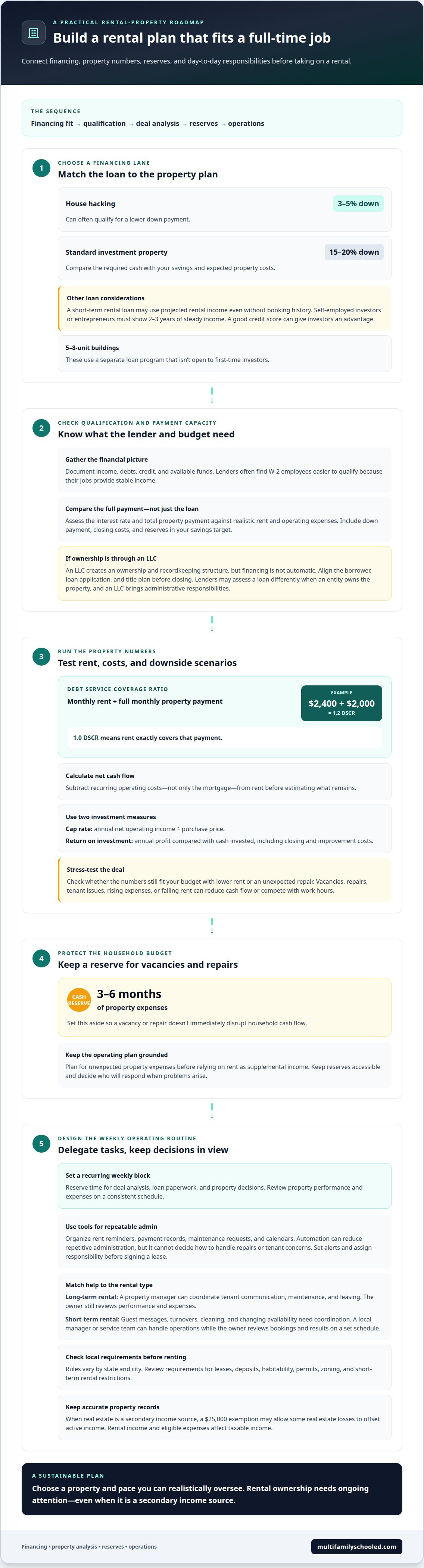
Start with the loan structure, then assess income, credit, and rental analysis. House hacking can often qualify for a 3–5% down payment, compared with 15–20% for a standard investment property. A short-term rental loan may use projected rental income even without booking history. Self-employed investors or entrepreneurs must show 2–3 years of steady income. A good credit score also gives investors an advantage when seeking a mortgage.
For rental properties, calculate the debt service coverage ratio (DSCR): monthly rent divided by the full monthly property payment. Rent of $2,400 and a $2,000 payment produce a 1.2 DSCR; 1.0 means rent exactly covers that payment. A 5–8-unit building uses a separate loan program that isn’t open to first-time investors. Compare loan structures against expected income and responsibilities before choosing a property.
Limited time makes deliberate delegation essential. Set a recurring weekly block for deal analysis, loan paperwork, and property decisions. Use rental management tools to organize rent reminders, payment records, maintenance requests, and calendars. Automation can cut repetitive admin, but it can’t make decisions about repairs or tenant concerns. Set alerts and decide who handles each task before signing a lease.
For a long-term rental, a property manager can coordinate tenant communication, maintenance, and leasing. Outsourcing these duties can reduce daily demands, but you remain responsible for reviewing performance and expenses. Short-term rentals have a different rhythm: guest messages, turnovers, cleaning, and changing availability all need coordination. A local manager or service team can handle operations while you review bookings and results on a set schedule.
When real estate is a secondary income source, a $25,000 exemption may allow some real estate losses to offset active income. Rental income and eligible expenses affect taxable income, so keep accurate records for each property.
Landlord rules vary by state and city. Before renting, review local requirements for leases, deposits, habitability, permits, zoning, and short-term rental restrictions, since these can shape your operating plan.
2. Investing in rental property alongside a full-time job
Start by matching your financing plan to your paycheck, available cash, and property costs. Lenders often find W-2 employees easier to qualify because their jobs provide stable income. Include those costs in your savings target before you commit.
How much money do you need to start? It depends on the down payment, closing costs, and reserves your loan and property require. Keep 3–6 months of property expenses in reserve, so a vacancy or repair doesn’t immediately disrupt household cash flow.
To finance a property while employed full time, document your income, debts, credit, and available funds, then compare loan terms. Assess the interest rate and total payment against realistic rent and operating expenses. Before making an offer, calculate net cash flow after recurring costs, not just rent minus the mortgage.
For rental analysis, estimate annual net operating income and divide it by the purchase price to calculate the cap rate. To assess return on investment, compare annual profit with the cash invested, including closing and improvement costs. Test the numbers with lower rent or an unexpected repair. These scenarios help show whether the deal still fits your budget.
Buying through an LLC creates an ownership and recordkeeping structure, but it doesn’t make financing automatic. Align the borrower, loan application, and title plan before closing; lenders may assess a loan differently when an entity owns the property. An LLC also brings administrative responsibilities, so weigh those against your goals and consult a qualified tax or legal professional about your circumstances.
Risks include vacancies, repairs, tenant issues, and demands that conflict with work hours. A property may also produce less cash flow than projected if expenses rise or rent falls. Set aside time to review the numbers, keep reserves accessible, and decide who will respond when problems arise. That preparation makes the commitment easier to manage.
3. Can You Really Invest in Real Estate While Working Full Time?
Yes, with a strategy that fits your available hours and operating capacity. One investor worked 40 or more hours a week as a pharmacist while building a rental portfolio. He purchased one property per year during his first four years, showing how steady progress can suit a demanding work schedule. Focus on consistent deal review, clear priorities, and a property type you can realistically oversee.
For busy professionals, lower-touch options include owning a small number of rentals, hiring help for daily operations, or investing through real estate investment trusts (REITs) and crowdfunding. Passive investors with full-time jobs could ideally manage 2–3 properties at a time. A Houston investor added a duplex and a BRRRR property over five years, then earned over $1,100 per month in net cash flow.
REITs and crowdfunding can provide real estate exposure without directly handling tenants or property upkeep. Direct ownership gives you responsibility for decisions and operations, while income, expenses, and equity are tied to the specific property. Compare the involvement, control, and investment structure before choosing; these options work differently and aren’t interchangeable.
Reinvesting rental income can help grow a portfolio without relying only on new savings. The investor who bought one property annually reinvested 100% of rental cash flow during his first four years. Set a rule for directing surplus income toward reserves, improvements, or another purchase, while keeping the property’s operating needs funded.
Leverage uses borrowed money to acquire property, allowing an investor to control an asset with less than its full purchase price upfront. It can also increase debt and payment obligations, so evaluate income, interest, expenses, and vacancy risk together. One investor estimated needing 4–5 rental properties to reach $10,000 per month in rental income. That was his target, not a universal outcome; build projections around your own property analysis and timeline.
4. Balancing a full-time job with real estate investing
Build your investing routine around your actual work calendar, not an ideal week. Reserve a regular block for reviewing deals, numbers, and investment performance. Keep it focused: compare property assumptions, review rental updates, and decide what needs attention next. A written agenda helps keep deal research from spreading into every evening.
Leave room for the unexpected. The research guidance says investors may spend up to 60 hours per week on real estate activities alongside a full-time job. That makes workload planning essential, especially for employees with long shifts. The investor featured in the examples worked pharmacist shifts lasting 14 to 16 hours. Set a clear limit on new tasks before a purchase, and avoid treating every alert as urgent.
Delegation can change the weekly load. One investor’s rental portfolio takes less than one hour per week of active management, while virtual assistants handle 80–90% of daily rental operations. That arrangement depends on defined tasks and reliable handoffs. Document how rent questions, repair requests, and routine updates should be handled, then keep your own scheduled review for decisions and performance.
Use a simple weekly system: review property and deal updates, identify decisions only you can make, and assign recurring tasks to the right person. Track the time you spend as carefully as you track returns. If rental demands repeatedly interrupt your job or personal time, pause expansion and adjust the operating plan. A sustainable pace matters more than acquiring another property quickly.
For a more structured approach to deal review and portfolio planning, explore real estate investing mentorship. Bring your work schedule, current responsibilities, and investment goals into the planning process. That gives you a practical basis for deciding what to handle yourself, what to delegate, and when a new purchase fits.
Multifamily Schooled: Mentorship Program
Multifamily Schooled’s Multifamily Mentorship Program can help you turn investing goals into a focused plan for finding and purchasing apartment buildings. Consider mentorship if you need guidance connecting deal analysis, financing decisions, and your available time. It provides a clearer process, while property ownership and day-to-day rental responsibilities remain yours.
Choose a learning format that fits your next step. Live Workshops and Online Challenges offer structured ways to build your real estate knowledge, while MFScout.ai provides deal-finding, analysis, and capital-raising tools to support your search. Use these resources to strengthen your understanding before evaluating opportunities and deciding what fits your finances and schedule.
If you’re ready to build your apartment investing knowledge, visit multifamilyschooled.com to explore your next step.
Make Your Next Move Deliberate
Make your next step a decision, not another open-ended research session. Write down what you want investing to support, how much time you can consistently give it, and what would make you pause before committing. Use those boundaries to assess opportunities. A clear personal framework keeps each decision connected to your wider financial plans.
Real estate investing while working a full-time job is a process you can shape around your priorities. You can build knowledge, refine your approach, and make progress without treating a career change as the first milestone. When you’re ready for guidance turning your goals into an actionable plan, contact Multifamily Schooled today.
Take the next practical step, then keep moving with focus. Your investing path can grow one considered decision at a time.
Frequently Asked Questions
Can You Really Invest in Real Estate While Working Full Time?
Yes, real estate investing while working a full-time job is possible when you match each property’s demands to your available time. For example, an owner with unpredictable shifts might prioritize a long-term rental and arrange backup help for urgent issues. Before purchasing, map out how you’ll handle decisions during work hours. Build an operating plan around your schedule rather than relying on constant availability.
How many rental properties do you actually need?
There’s no universal property count; the useful measure is net income relative to your financial goal. Estimate each property’s income after debt payments, operating expenses, vacancies, and reserves, then compare the result with your target. One property with reliable net income may contribute more than several with high expenses. Revisit the calculation as rents, costs, and personal goals change.
Can you build passive income while working a 9-to-5?
Yes, rental income can supplement employment income, and real estate investing while working a full-time job can fit a 9-to-5 when you set a consistent oversight routine. Ownership still involves tracking expenses, reviewing reports, approving repairs, and planning for vacancies. Separate urgent decisions from scheduled check-ins. This helps protect work time while keeping you informed about the property’s financial health.
How do you qualify for an investment property loan?
Lenders assess your financial profile and the proposed property before approving financing. Prepare a clear record of income, existing debt, credit history, available funds, and the rental’s expected performance. Then compare the projected payment with realistic income and expenses. A complete, consistent application helps show how you’ll manage the purchase and meet its ongoing obligations.
How do you save for a down payment while working full-time?
Set a property-fund goal and automate regular transfers from each paycheck into a dedicated savings account. Review recurring expenses and direct any planned reductions toward that account. Keep the fund separate from everyday spending, and update your target as you evaluate properties. This makes saving a repeatable habit and helps you track progress toward a future purchase.
How long does it take to reach financial freedom with rentals?
Financial freedom arrives when dependable net rental income covers the living expenses you want it to replace. Track income after costs, debt payments, and reserves, rather than counting properties alone. Equity can build wealth, but it isn’t the same as spendable monthly income. Review your actual cash flow and personal budget regularly, then adjust your acquisition pace to keep the plan aligned with your goal.



