

Managing cash flow during high vacancy periods with reserves
Vacancy does not have to become a cash crisis. Managing cash flow during high vacancy periods starts with tracking collected rent against expenses, forecasting how empty units affect cash, and maintaining a reserve for operating costs. That buffer gives you room to meet ongoing bills when rental income falls.
Filling vacant units quickly matters, but a strong plan also accounts for the time between tenants, when income may pause while expenses continue. Forecast expected rent, fixed costs, maintenance, and different vacancy scenarios. Then identify which costs you can control without neglecting the property.
This guide explains how to calculate cash flow, model vacancy scenarios, manage operating costs, and build reserves for slower periods. Use the steps to make decisions based on realistic figures, not the assumption that rent will arrive exactly as planned.
Key Takeaways
- Separate expected rent from other income, then subtract fixed, variable, and surprise costs to see what the property really generates.
- Model different occupancy and payment scenarios so you can spot cash shortfalls early and plan your response.
- Use regular inspections and maintenance planning to catch repair needs before they grow into larger costs.
- Build reserves when income is stronger and keep them accessible for periods when rent collections fall.
1. Calculating rental income and expenses
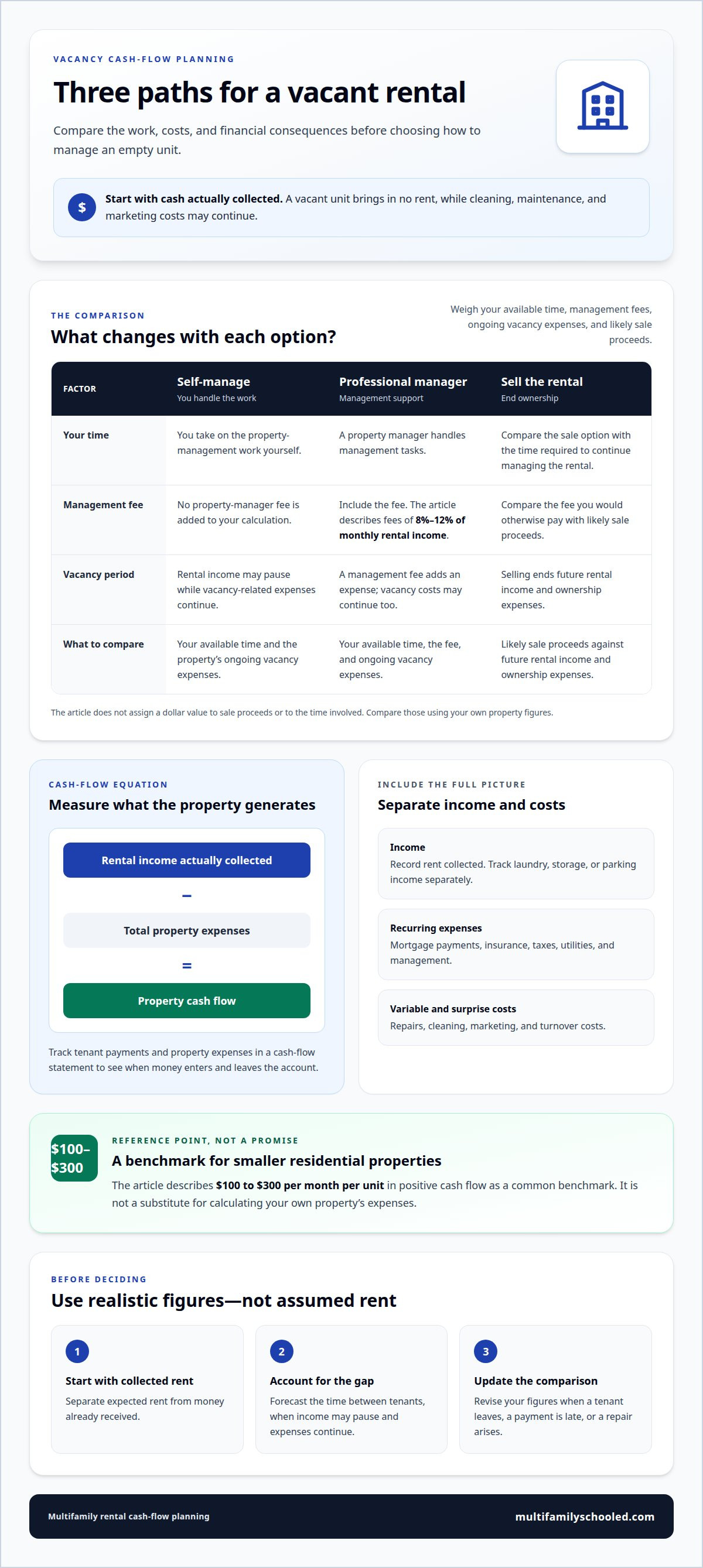
Start with monthly rental income actually collected, not rent merely scheduled. A vacant unit brings in no rent, while cleaning, maintenance, and marketing costs may continue. Record each tenant payment and property expense in a cash-flow statement to see when money enters and leaves your account.
Calculate cash flow by subtracting total expenses from rental income. Include recurring costs such as mortgage payments, insurance, taxes, utilities, and management, along with variable repairs and turnover costs. Record income from laundry, storage, or parking separately. This breakdown shows which income sources support the property and where a shortfall could arise.
Build a simple monthly forecast using expected rent, fixed costs, and likely unexpected expenses. Then compare it with actual payments and update the forecast when a tenant leaves or a repair arises. For smaller residential properties, a positive cash flow of $100 to $300 per month per unit is described as a common benchmark, not a substitute for calculating your own property’s expenses.
Reduce avoidable outflows before cutting services that protect the property. Review supplier terms, remove unnecessary recurring expenses, and schedule nonurgent work when funds allow. Don’t postpone maintenance that could worsen damage or make a unit harder to rent. If you use a property manager, include the fee in your calculation; fees are described as ranging from 8% to 12% of monthly rental income.
To compare self-management, professional property management, and selling a vacant rental, weigh your available time, management fees, ongoing vacancy expenses, and likely sale proceeds. Self-management means handling the work yourself; professional management adds a fee; selling ends both future rental income and ownership expenses.
In the United States, check for active rental-assistance or small-business relief programs offered through state or local initiatives. Review each program’s eligibility rules and covered expenses before including potential support in your cash-flow forecast.
2. Cash-flow forecasting and vacancy scenarios
Forecast cash flow regularly, using accounting software to generate reports on current and expected finances. Build a separate projection for each property, then map expected rental receipts against fixed costs, loan payments, and planned work. A 13-week cash-flow model can show how available cash may change under possible worst-case scenarios. Update it when a lease ends, a payment arrives late, or an unexpected repair changes planned spending.
To reduce vacancy time and attract qualified tenants, start marketing before a lease ends, keep the unit presentable, and use digital platforms with professional marketing. Encourage renewals through consistent tenant communication, then screen applicants by checking background, income, and rental history. These steps help you estimate when rent may resume without assuming every vacancy will be filled immediately.
Build separate scenarios instead of relying on a single occupancy assumption. Compare a fully occupied property with a planned turnover and with several vacancies at once. For each case, adjust rent collections, turnover costs, utilities, maintenance, and other outflows. If a tenant payment is delayed, move it to the expected arrival date in your forecast rather than counting it as cash already available. This makes projected balances more useful for decisions.
Compare your forecast with actual results regularly. If it shows a shortfall, identify the cause: missed payments, a longer vacancy, rising operating costs, or changed mortgage terms. Track interest-rate and loan-payment assumptions, since refinancing when rates drop may lower monthly payments. Test whether the updated projection covers upcoming obligations, including unexpected expenses. Treat surplus from a fully occupied period as a buffer for later costs, not a reason to ignore weaker scenarios. Keep each major assumption tied to a clear source and update it when circumstances change.
When the property is fully occupied, improved cash flow can help build a surplus to offset unexpected costs.
3. Controlling operating costs
When rental income falls, prioritize costs that protect the building, maintain its rental condition, and prevent small defects from becoming larger repairs. Include essential upkeep and scheduled maintenance in the operating budget. Arrange an annual inspection to identify maintenance needs and plan repair expenses. Regular inspections and maintenance can help prevent costly repairs.
Next, review expenses line by line. Separate recurring contracts, utility use, supplies, and repair invoices to see what changed and why. Compare supplier terms and negotiate better rates where possible. Remove unnecessary costs, such as subscriptions or services the property no longer uses. This targets avoidable spending without cutting work that keeps units appealing to tenants.
Use a simple process for each expense: record its purpose, decide whether it is essential now, and consider whether it can be reduced or rescheduled. For example, defer cosmetic work in an occupied unit if it does not affect the unit’s condition or rental appeal. Do not postpone repairs that could worsen damage or keep a unit vacant longer. Savings should protect the property, not create a larger bill later.
When considering rent relief, compare a lower rent with a temporary concession by calculating the income given up over the lease. A rent reduction lowers income for each affected payment, while a concession reduces it for the specified period or amount. A targeted incentive may suit a particular vacancy; a lasting rent adjustment continues to affect receipts.
Review the effect of each change. If a supplier adjustment reduces an operating expense, update the budget and check the next invoice. If repair costs rise, find out whether an inspection, recurring defect, or delayed work explains the increase. Record decisions and outcomes, then adjust spending as actual costs change. This makes expense control an ongoing operating practice rather than a rushed response to a shortfall.
4. Cash reserves for low-cash-flow periods
A reserve can turn a vacancy from an immediate cash squeeze into a manageable operating gap. A common target is enough cash to cover three to six months of operating expenses. Calculate it using essential outflows, such as mortgage payments, insurance, taxes, utilities, and necessary repairs. Use the property’s actual budget, not projected rent.
Keep the reserve separate from everyday operating cash, for example in a business savings account. This makes the buffer visible and helps prevent routine spending from using money set aside for vacancies. Decide which costs qualify, such as carrying expenses for an empty unit or urgent work needed before it can be rented again. Record each withdrawal and its purpose.
Build the balance deliberately during stronger periods. If income varies by season, direct part of each higher-cash-flow period into reserves and limit discretionary expenses during slower periods. After a withdrawal, include replenishment in the next budget. A reserve is working capital for timing gaps, not profit to distribute or a substitute for tracking rental performance.
Compare your reserve with the vacancy scenarios in your forecast. If a unit stays empty longer than expected, estimate how expenses will continue and how quickly the reserve could be used. If mortgage interest or another fixed obligation changes, update the target because the cash needed to maintain stability may change too. Interest earned in a savings account can add to the balance, but the reserve’s main purpose is ready access to cash, not maximizing returns. Set a clear operating-expense target, keep it in a separate account, and rebuild it after each withdrawal.
Multifamily Schooled
Multifamily Schooled helps investors learn how to find and purchase apartment buildings. If vacancy risk has you reconsidering your investment strategy, its mentorship and educational resources can help you assess multifamily opportunities and plan your next steps.
The Mentorship Program, Live Workshops, Online Challenges, and Deal Finding Software support learning through different formats. They focus on investment education and deal-finding, not managing a property or supplying investment capital. Use them when you want structured guidance as you develop your approach to evaluating opportunities and planning for ownership costs.
To explore your options, book a free strategy call with Multifamily Schooled to discuss mentorship and your investing goals.
Build a More Resilient Investment Plan
A stronger real estate strategy takes shape before the next decision. Let managing cash flow during high vacancy periods inform how you assess risk, judge an opportunity’s fit, and decide how much uncertainty you can carry. This perspective can help you move beyond reacting to a difficult month and make deliberate choices about the portfolio you want to build.
Carry that discipline into your next investment step. Keep learning, refine your criteria, and focus on decisions that support your long-term goals. Multifamily Schooled offers mentorship and educational resources for investors developing their knowledge and approach to apartment investing.
Contact Multifamily Schooled to explore a next step that fits your goals. Keep moving forward with intention, and build your investing journey one considered decision at a time.
Frequently Asked Questions
How can landlords forecast cash flow during high vacancy periods?
A useful forecast for managing cash flow during high vacancy periods starts with a calendar of expected rent receipts and property bills. Model a conservative case with delayed move-ins and late payments alongside the expected case, then compare projected balances. Update assumptions whenever a lease, payment date, repair, or financing term changes so decisions reflect current property conditions.
How much cash reserve should a landlord keep for vacancies and emergencies?
A useful reserve target is three to six months of operating expenses. Base the calculation on essential property costs, not scheduled rent or hoped-for collections. Add up recurring bills and necessary upkeep that would continue if a unit were empty. Keep the reserve accessible and separate from everyday spending, then replenish it after using funds for a vacancy or emergency.
Can landlords negotiate mortgage, tax, insurance, or utility payments during a vacancy?
Before a bill becomes overdue, ask the lender, tax office, insurer, or utility provider about available payment arrangements. Explain the vacancy, state what payment you can manage, and request written details of any proposed change. Before agreeing to revised terms, ask how a deferral or adjusted schedule could affect later payments, coverage, fees, or account standing.
How can landlords use a line of credit or other short-term financing to cover a cash shortfall?
When managing cash flow during high vacancy periods, treat short-term borrowing as a bridge, not a permanent fix. First calculate the gap and identify how you would repay it, such as from rent collected after leasing a unit. Compare a line of credit with a business loan by reviewing interest, fees, repayment timing, and required payments. Borrow only what your forecast shows you need.



