
Investing in Apartments vs Mobile Home Parks: Compare Costs
A lower housing cost doesn’t automatically make a mobile home park the cheaper investment. When investing in apartments vs mobile home parks, the answer depends on what you own: the apartment units, the park’s land, the homes, or some combination. In some states, manufactured-home ownership costs can be lower than apartment rents, but investors must also account for operations, maintenance, and financing.
It’s easy to focus on purchase price or rent and overlook the work behind the numbers. Compare operating expenses and maintenance responsibilities, including how resident-owned homes can shift some upkeep away from park owners. Then weigh the tradeoffs, from maintaining apartment interiors to caring for park land and shared facilities. This comparison can help you decide which model fits your budget, management capacity, and long-term investment goals.
Key Takeaways
- Compare what you own before comparing costs: land-only park investments shift different responsibilities than owning both the homes and the land.
- Map maintenance duties by property type. Resident-owned homes can mean less interior upkeep for park owners, while land and shared facilities still need attention.
- Look beyond headline operating costs to staffing needs, utilities, repairs, and the scale of the property.
- Weigh each model against your management capacity, financing approach, and investment goals before deciding which opportunity to pursue.
Maintenance responsibilities for park owners and residents
In many mobile home parks, residents own their homes and rent the land. The park owner maintains the land and facilities, while residents handle their homes’ interiors. That division can reduce repair work for owners, but roads, utility systems, and shared spaces still require attention. Parks also typically have less common area than apartment buildings.
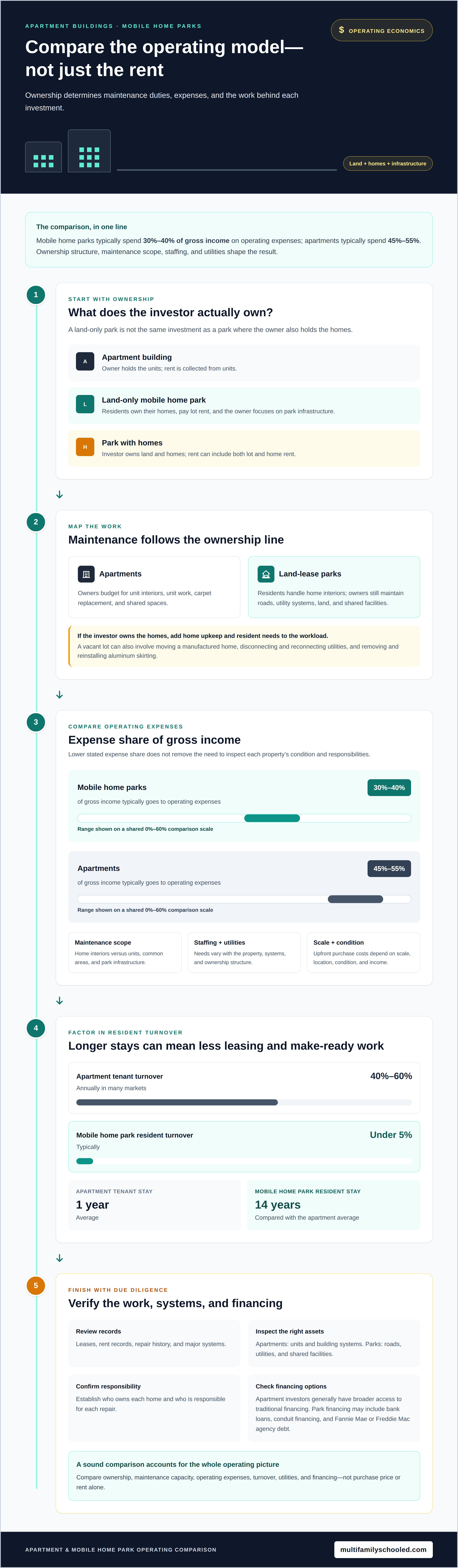
If you’re moving from apartments to a mobile home park, first map out what the purchase includes. A land-only park differs from a property where you also own the homes. In the first model, residents usually pay lot rent, and the owner focuses on park infrastructure. In the second, the owner also handles home upkeep and resident needs. Turnover can affect both rent collection and maintenance planning.
Financing depends on the property and lender. Apartment investors generally have broader access to traditional financing, while mobile home park owners may have fewer traditional options. Park financing can include bank loans, conduit financing, and Fannie Mae or Freddie Mac agency debt.
Before buying either asset, review leases, rent records, repair history, and major systems. For a mobile home park, assess roads, utilities, and shared facilities; for apartments, inspect units and building systems. Confirm who owns each home and who is responsible for each repair.
| Option | Ownership | Maintenance focus | Rent collection |
|---|---|---|---|
| Apartment building | Owner holds units | Interiors and shared areas | Unit rent |
| Land-only mobile home park | Residents own homes | Land and park facilities | Lot rent |
| Park with homes | Investor owns land and homes | Facilities and home repairs | Lot and home rent |
Choose the model that fits your maintenance capacity and the ownership responsibilities you want to take on.
Manufactured-home ownership costs commonly include mortgage payments, property taxes, and insurance. Apartment rents may rise over time, while a fixed-rate home mortgage can keep payments consistent. For U.S. property analysis, organize assumptions about property investment opportunities alongside the maintenance responsibilities attached to each asset.
Operating costs compared with apartments
A decision about investing in apartments vs mobile home parks starts with operating costs, not rent alone. Mobile home parks typically spend 30%-40% of gross income on expenses, compared with 45%-55% for apartments. Maintenance scope, staffing, utilities, and ownership structure all affect the difference. Resident-owned mobile homes can mean fewer interior repairs for park owners, while apartment owners budget for unit work, carpet replacement, and shared spaces.
Moving a manufactured home can add costs when a lot becomes vacant. The move may also require disconnecting and reconnecting utilities, as well as removing and reinstalling aluminum skirting. These costs can affect whether a resident moves and how quickly the vacant lot is filled.
Upfront purchase costs vary with scale and condition. Apartment building costs also depend on location, condition, and income. Compare the full acquisition budget rather than assuming either option is automatically more affordable.
Competition shapes the search, too. There are about 10 times as many apartments as mobile home parks, while an estimated 90% of U.S. parks remain with small owners. For investors weighing investing in apartments vs mobile home parks, that difference may affect deal availability, but it doesn’t remove due diligence or operating demands. Compare occupancy, utility systems, staffing needs, and expected repairs before assessing income potential.
Use a consistent screen for each property. A multifamily investment framework can help organize deal criteria alongside operating costs and ownership responsibilities.
Why Invest in Mobile Home Parks?
Mobile home parks have a distinct operating model, but returns depend on infrastructure, occupancy, and responsible financing. Compare these factors with apartment ownership before choosing where to invest.
Operating Expenses and Models
Mobile home parks typically use 30%-40% of gross income for operating expenses, compared with 45%-55% for apartments. In a land-lease model, residents own their homes and pay lot rent; apartment owners maintain and rent complete units. The Internal Revenue Service states that a typical apartment building investment can be depreciated over 27.5 years. Mobile home park land improvements are typically depreciated over 15 years.
Expansion and Development Constraints
Adding lots can increase housing capacity and potential income, but park expansion may face township opposition. Development is easier when existing zoning allows expansion; otherwise, approval can be difficult. Before valuing future growth, separate current lot income from expansion plans. Financing assumptions should reflect the property as it stands, not proposed units that zoning may not permit.
Vacancy and Tenant Turnover
Vacancy depends on occupancy, available units or lots, and how quickly suitable residents can be placed. Turnover differs: apartment turnover runs 40%-60% annually in many markets, while mobile home park resident turnover is typically under 5% annually. Apartment tenants typically stay an average of one year, compared with 14 years in mobile home parks. Longer stays can reduce the frequency of leasing and make-ready work.
Utilities, Infrastructure, and Land Ownership
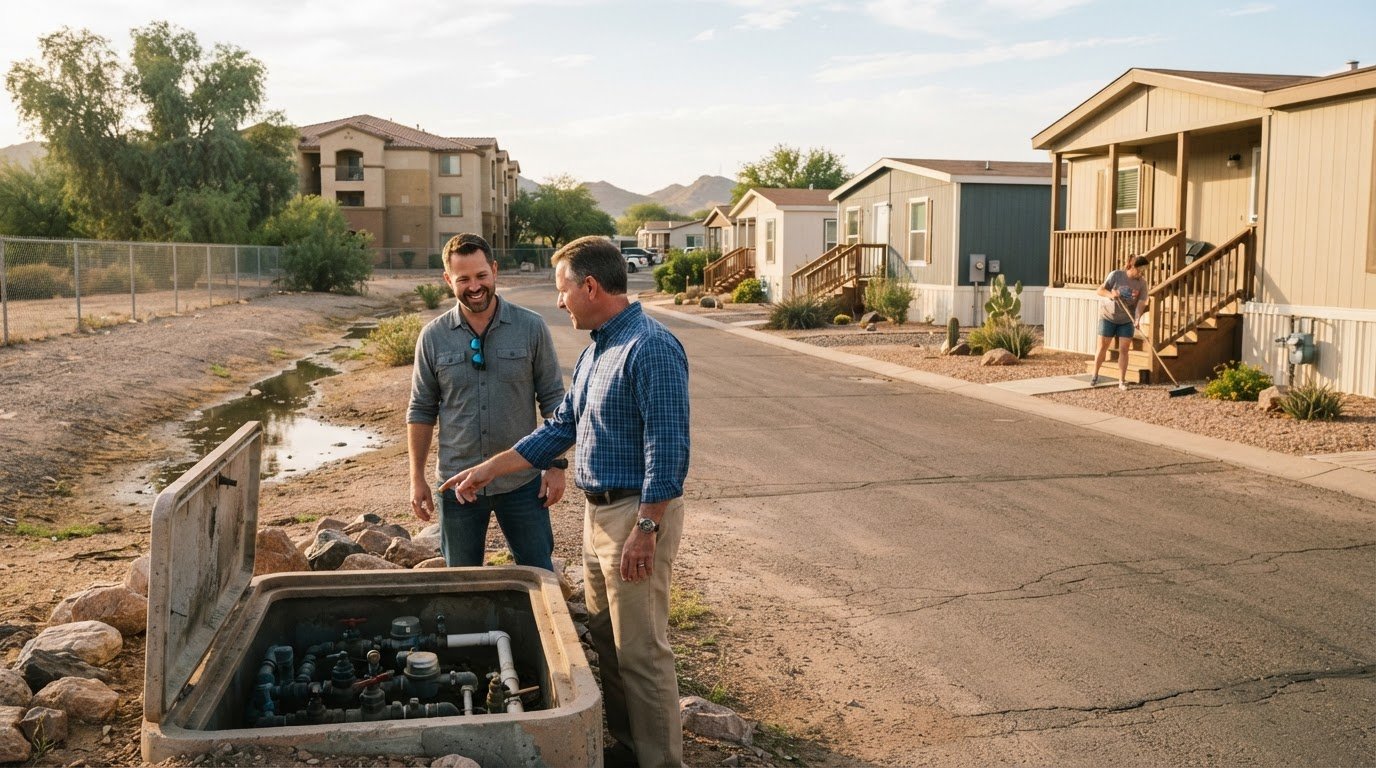
Land ownership determines which infrastructure costs fall to the park owner. A land-lease owner maintains roads, utility systems, and shared facilities, while residents own their homes. City utilities can shape a park’s appeal and operating needs, while private systems may require different oversight. Review utility condition, service arrangements, and repair responsibilities together: these details affect operating costs, future capital needs, and the owner’s ability to add lots.
Comparing apartments and mobile home parks as investments
Investing in apartments vs mobile home parks means comparing income sources, ownership scope, and local pricing. Start with the full operating model, not just rent or cap rate.
| Criteria | Apartments | Mobile home parks |
|---|---|---|
| Income | Rent from apartment units | Lot rent, or lot and home rent |
| Typical lot rent | Not applicable | |
| Cap rates, Southeast and Midwest, 2026 | 4.5%-6% | 6.5%-8.5% |
| Ownership options | Investor owns and rents units | Investor may own land alone, or land and homes |
That spread is a comparison, not a promise of stronger returns. Location, occupancy, expenses, and property condition still shape results. Mobile home parks may have higher cap rates in these regions, while apartments offer a more familiar unit-rental model. Weigh both options against the work and capital each property requires.
Park income also depends on ownership structure. If residents own their homes, the park owner collects lot rent instead. Owning both the homes and the land creates another income stream, along with added responsibilities.
Vacant pads can represent a growth opportunity, not immediate income. Filling 30 vacant lots in a 100-lot park at $400 per month per pad would add $144,000 in annual gross income. That assumes occupancy is achieved; amenities or membership privileges, such as garages or RV parking, may also support cash flow.
Decision guide: Favor apartments if you want income tied to unit rentals. Consider parks if lot-based income, potential pad occupancy, and land-focused operations fit your plan. A useful framework for investing in apartments vs mobile home parks is to compare each asset against your operating capacity and acquisition criteria. Strengthen your analysis with a structured multifamily deal analysis.
Multifamily Schooled
Multifamily Schooled helps investors build the knowledge and systems to find and purchase apartment buildings. Once comparing property models has clarified your priorities, its educational resources can help you take a practical next step toward apartment opportunities.
The Mentorship Program, Live Workshops, Online Challenges, and Deal Finding Software support different parts of the learning process. Use them to strengthen your understanding of deal evaluation and develop a focused apartment-building strategy. These educational tools can help you assess opportunities, but the decision between a park and an apartment investment should still reflect your financial and operational goals.
Ready to develop your apartment investing skills? Contact Multifamily Schooled to discuss a next step that fits your learning goals.
Turn Your Investment Criteria Into a Next Step
Before pursuing a property, define what you want your investment to do. Consider how involved you can be in operations, which income model you prefer, and how much uncertainty you can manage. These priorities make it easier to screen opportunities consistently instead of chasing a deal just because its headline numbers look attractive.
As you weigh investing in apartments versus mobile home parks, turn your priorities into clear acquisition criteria. Identify the property characteristics that matter most, then apply the same standards to each opportunity. A disciplined process can help you spot mismatches early and focus on assets that fit your plan.
If you’re ready to build your apartment-investing knowledge and clarify your next move, contact Multifamily Schooled to discuss your options. Take the next step with a clear strategy and keep moving toward your long-term goals.
Frequently Asked Questions
Are Mobile Homes Cheaper Than Apartments?
Sometimes, but the comparison depends on whether you’re renting an apartment, owning a manufactured home, or investing in the property. In some states, manufactured-home ownership costs can be lower than apartment rents. Ownership still involves mortgage payments, property taxes, and insurance, while a resident who owns a home in a park may also pay lot rent. Include every relevant expense before comparing monthly housing costs.
How do apartment and mobile home park investment returns compare?
Mobile home park ownership typically delivers higher cash-on-cash returns than a typical multifamily investment, but that doesn’t guarantee a better result for every property. Returns depend on acquisition cost, occupancy, financing, expenses, and whether the investor owns homes as well as land. Vacant lots, for example, create potential income only after they’re filled, while amenities may provide another way to support park revenue.
What are typical cap rates for apartments vs mobile home parks in the U.S.?
For well-located properties in the Southeast and Midwest in 2026, mobile home parks are trading at cap rates of 6.5%-8.5%; comparable apartment deals often have cap rates of 4.5%-6%. These figures describe those regions, not every U.S. market. A cap rate compares a property’s net operating income with its price, so local income and expenses matter alongside the headline rate.
How much capital is needed to buy an apartment building vs a mobile home park?
There’s no single capital requirement for either asset. Purchase price, financing, property condition, and transaction costs determine the amount. Apartment acquisition capital varies by the building and deal structure.
What are typical operating expenses and maintenance costs for apartments and mobile home parks?
Expense ratios offer a starting point: mobile home parks typically use 30%-40% of gross income for expenses, compared with 45%-55% for apartments. Your own budget should separate recurring operations from major repairs. For apartments, model unit turnover work, such as repainting or replacing carpet. For parks, account for roads, utility systems, and shared facilities, plus staffing needs where property income supports them.
What are the main risks of investing in mobile home parks vs apartments?
Mobile home park risks include infrastructure problems, limited traditional financing, and expansion plans blocked by zoning or township opposition. A small park may not generate enough cash flow to support on-site management or maintenance staff. Apartments have their own exposure to unit turnover and interior repairs. For either investment, test income assumptions against occupancy, physical condition, and the responsibilities attached to that specific ownership model.