

How to Handle Tenant Delinquency in Multifamily Properties
Unpaid rent is a cash-flow problem before it becomes an eviction decision. Knowing how to handle tenant delinquency in multifamily properties starts with confirming the balance, reviewing the signed lease, and contacting the resident promptly. Keep written records of communications, issue required notices on time, and follow the rules that apply where the property is located.
Late rent can put mortgage payments under pressure, but a rushed decision can create new problems. Set a clear timeline, communicate consistently with tenants, and understand what forbearance can and cannot do. This guide covers the first steps after rent is missed, how to manage lender pressure and repayment discussions, and how to organize notices and follow-ups. Build a consistent process while keeping each tenant’s circumstances and the property’s obligations in view.
Key Takeaways
- Start by confirming the balance, reviewing the lease, and contacting the resident promptly before deciding on next steps.
- Separate tenant arrears from mortgage obligations, and understand the limits and repayment terms of any forbearance before relying on it.
- Use a consistent delinquency timeline so overdue accounts, notices, and follow-ups don’t fall through the cracks.
- Keep tenant communications clear and documented, using an appropriate mix of calls and written notices.
1. What Should You Do If Delinquent Tenants Create Mortgage Problems?
Start by separating resident arrears from the mortgage payment due. Compare the rent ledger with bank deposits, then calculate the shortfall and lender deadline. A property can show 94% occupancy in Q4 of 2024 and still face weak collections when residents are behind. The U.S. Bureau of Labor Statistics reported U.S. unemployment at 3.7% in May 2023. That figure gives economic context, but it doesn’t establish any individual tenant’s income or ability to pay.
Contact each resident promptly and directly. Ask when they can pay, clarify any confusion about the balance, and record the conversation. Set expectations before a problem arises: rental agreements should explain the due date, late-payment terms, and accepted payment methods. An online payment portal can make balances and transactions easier to track, while automated reminders can prompt residents before and after rent is due. These practices support consistent follow-up, but they don’t replace personal communication when a payment is missed.
If the account remains unpaid, review the signed agreement and prepare a clear written notice. State the amount owed, the period it covers, the payment deadline, and the landlord’s intent to pursue eviction if the debt isn’t cleared by that date. Use the notice and delivery process required in the property’s jurisdiction. Keep a copy with the ledger and record how and when it was delivered. Precise figures and dates reduce confusion about what must be paid and by when.
Discuss a realistic payment arrangement, but put every amount and due date in writing. Landlords can continue discussions while filing legal proceedings; a payment arrangement memorialized in a court order is more readily enforceable than one negotiated outside court. The U.S. Congress passed the CARES Act in March 2020. Borrowers with federally backed multifamily property loans could apply for forbearance until December 31, 2020, or until the federal emergency period ended, whichever came first. Treat that as a historical limit, not an open-ended solution to today’s mortgage pressure.
2. Eviction restrictions and late fees during forbearance
Forbearance changes the borrower’s mortgage-payment schedule; it doesn’t resolve tenant arrears. Read the servicer’s written approval for its conditions, covered payments, and repayment terms. Forbearance terms can vary, so check the written agreement for its duration. It may be extended for up to two additional 30-day periods, for a total of 90 days. Check the forbearance agreement to understand how missed payments are handled. Build those obligations into the property’s cash-flow plan before agreeing to payment arrangements with residents.
Keep lender-relief and tenant-enforcement decisions separate. A forbearance agreement alone doesn’t tell you whether eviction restrictions or late-fee limits apply to your property. Review the loan documents and applicable state and local rules before charging fees or filing. These requirements can affect the timing and permitted steps. Don’t assume a lender’s approval changes a resident’s rental agreement or overrides tenant protections. Record the applicable rule, deadline, and decision for each account.
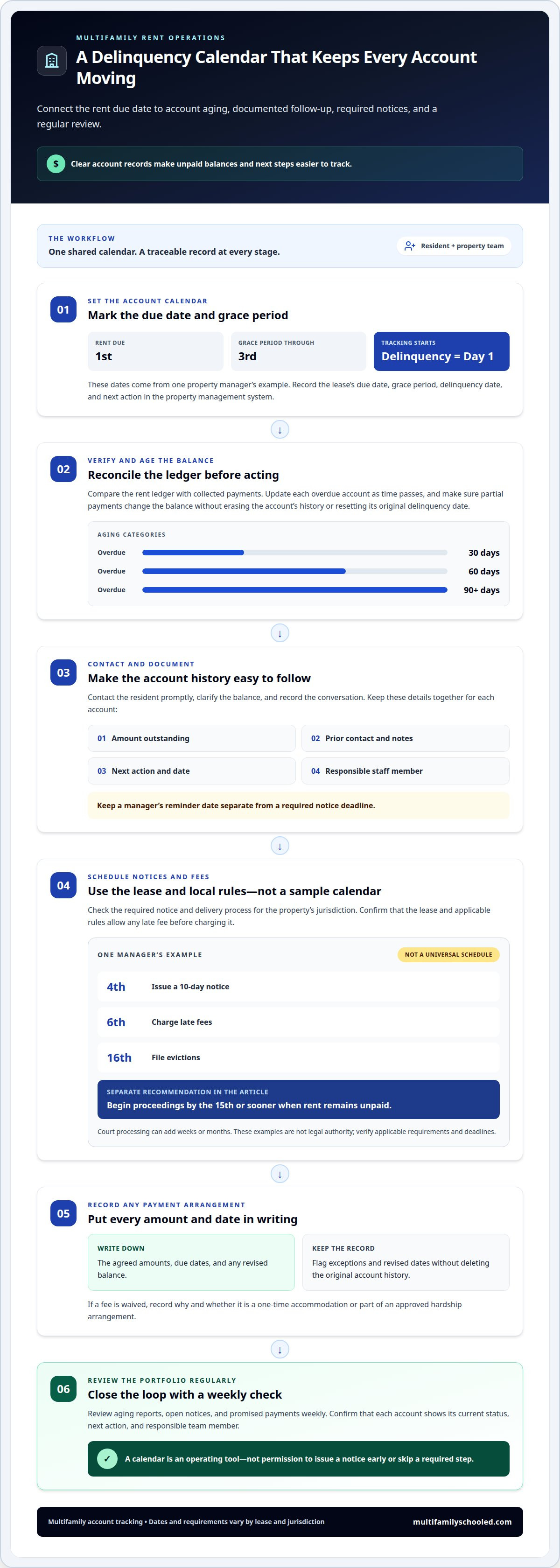
Use a consistent calendar for fees and filings. One property manager’s practice was to issue a 10-day notice on the 4th, charge late fees on the 6th, and file evictions on the 16th. That is an example, not a universal schedule. Another recommendation is to begin proceedings by the 15th or sooner when rent remains unpaid. Court processing can add weeks or months, so document missed deadlines and communications without treating a sample timeline as legal authority.
Set a written late-fee policy and apply it consistently. If you consider waiving a fee, record the reason and whether it is a one-time accommodation or part of an approved hardship arrangement. Before imposing another late fee, confirm that the rental agreement and applicable rules allow it. A clear policy helps prevent disputes about how fees were calculated. Pair any waiver with a specific payment date and written acknowledgment, so both parties understand the revised balance and next steps.
3. Standardized delinquency timelines
Set one calendar for every rental account. In one property manager’s example, rent is due on the 1st, with a grace period through the 3rd. Treat the point rent becomes delinquent as “Day 1” for tracking and action. For teams deciding how to handle tenant delinquency in multifamily, this shared starting point makes the timeline easier to apply. Record the due date, grace period, delinquency date, and next action in the property management system.
Then assign each unpaid balance an aging category. Multifamily aging reports commonly group overdue payments into 30-day, 60-day, and 90+-day periods. Update the category as time passes, and reconcile it against the rent ledger and collected payments. For example, a partial payment should change the balance, but it shouldn’t erase the account’s history or reset its original delinquency date. Accurate aging helps managers see which accounts need follow-up and how arrears affect cash flow.
Map notices and internal follow-ups to the same calendar. Start with the lease’s payment terms, then schedule each required notice and record its delivery date. Keep the notice deadline distinct from a manager’s reminder date. A standardized process should show the account status, amount outstanding, prior contact, next action, and responsible staff member. This creates a traceable record when a file moves between property management team members or needs review.
Review the schedule against local requirements before applying it across a portfolio. A calendar is an operating tool, not permission to issue a notice early or skip a required step. Flag exceptions, such as an approved payment arrangement, and document revised dates without deleting the original record. A reliable approach to how to handle tenant delinquency in multifamily includes weekly reviews of aging reports, open notices, and promised payments. This helps identify rising arrears before they disrupt planning.
4. Tenant notifications and collection communications
Notice requirements for unpaid rent vary by state, so there isn’t one notice that landlords can use nationwide. Identify the property’s jurisdiction, then follow its required notice type, timing, delivery method, and filing sequence. A 3-day notice to pay rent or quit shouldn’t be used merely as a late-fee reminder. A notice is a formal step, not a substitute for routine collection contact.
For overdue rent, start with a direct, professional phone call, then follow up by email or letter. State the amount due, the period it covers, and the action requested. Invite the resident to explain a discrepancy or propose a payment date, and keep the conversation focused on the rental account. If one channel gets no response, use another approved contact method. Consistent, respectful communication helps residents understand what they owe and what happens next.
Build a complete account record as each event occurs. Log the date and time of every call, email, letter, notice, payment, and promise to pay. Save copies of notices and correspondence, note how formal documents were delivered, and update the ledger when money arrives. Record the balance before and after each payment. This gives owners and the landlord a reliable timeline if staff change, a resident disputes the amount, or a court filing follows.
Keep follow-ups scheduled rather than improvised. One manager recommends contacting residents weekly by phone and email, and another suggests a call a couple of days before a court date. Treat these as operating examples, not universal legal deadlines. For former residents, a weekly message about payment-plan options can keep a discussion open. Set a clear next-contact date after every exchange, and document whether the resident is paying or has requested an arrangement. Explore multifamily investing resources to strengthen your broader operating decisions.
The required notice type, timing, delivery method, and filing sequence depend on the property’s jurisdiction.
Multifamily Schooled
Multifamily Schooled helps apartment investors build the knowledge to make informed decisions about ownership and operations. If tenant delinquency has exposed gaps in your investment plan, its educational resources can strengthen your broader understanding of multifamily real estate. Options include mentorship programs, live workshops, online challenges, deal-finding software, and Multifamily University.
These resources focus on investor education, not managing tenant accounts or handling rent collection for property owners. Use the steps in this guide to organize delinquency response, and turn to Multifamily Schooled when you want to deepen your multifamily investing knowledge. Contact Multifamily Schooled to discuss which learning path may suit your goals.
Build a Stronger Operating Playbook
Use the next delinquency as an opportunity to strengthen your operating playbook. Review what slowed the response, where information was difficult to track, and which decisions lacked clear ownership. Then refine the process so staff can follow it consistently across residents and properties. A clear approach to how to handle tenant delinquency in multifamily supports better decisions and professional resident communication.
Make the process part of your broader investor education, not just a response to one unpaid account. Multifamily Schooled’s learning resources can help you develop your knowledge as you grow as an apartment investor. Take the next step when you’re ready to build that foundation: contact Multifamily Schooled and explore how its educational resources fit your goals. Keep learning, keep improving your systems, and move forward with greater confidence.
Frequently Asked Questions
What Are the First Steps When Tenants Haven’t Paid Rent?
First, check whether the account reflects a missed payment or a posting error. Compare the resident ledger with bank activity and payment-portal records, then identify any returned or pending transaction. If the balance is correct, contact the resident and record the agreed next step. This reconciliation can prevent an avoidable dispute and helps staff act on accurate account information.
What Options Can You Offer Tenants to Repay Rent?
Possible arrangements include paying the balance in full by an agreed date or following a written installment schedule. Specify the amount, each due date, and what happens if a scheduled payment is missed. For example, a resident expecting income on a known date might propose installments timed around it. Record any agreement clearly and apply it consistently with the lease and applicable rules.
What Should You Do If Delinquent Tenants Create Mortgage Problems?
Contact the loan servicer early, before a projected shortfall becomes a missed mortgage payment. Prepare a current rent roll, collections summary, operating expenses, and cash-flow forecast so the lender can assess the property’s position. Ask which written options apply to the loan and what conditions each carries. Model the repayment impact before relying on temporary relief to cover an ongoing collections gap.
What’s your best practices for lowering delinquency?
Reduce avoidable late payments by making expectations clear before lease signing. Explain accepted payment methods, due dates, and how residents can raise billing questions. Review delinquency patterns by building, unit type, and lease start period to identify recurring operational issues, such as confusing instructions or payment-posting delays. Use those findings to improve resident onboarding and internal account handling.
What are the steps for handling delinquent rent in a multifamily property?
Use a repeatable workflow: reconcile the ledger, identify the lease terms, contact the resident, and record the outcome. Set a follow-up task for every unresolved account, including a promised payment date or pending dispute. Escalate the file when the agreed next step fails, following the applicable notice process. Close the account only after reconciling the balance and payment history.
How long is the grace period for rent and what late fees are legal by state?
There is no single grace period or late-fee amount that applies across every state. The lease, state and local rules, and fee terms determine when rent becomes late and what charge may be assessed. Keep the due date distinct from any grace period, and calculate fees only as permitted. Apply the same documented policy consistently to comparable accounts.



