

How to Choose a Multifamily Mentor and Assess Program Costs
A paid multifamily mentorship is worth considering when it offers practical guidance that fits your goals and meaningful access to experienced investors. To learn how to choose a multifamily mentor, look for a track record in apartment investing, expertise that matches your needs, and time for ongoing support. One useful benchmark is 20+ years of investing experience, but years alone don’t prove a mentor is the right fit.
It makes sense to question the commitment: a program should offer more than inspiration. This guide explains where to find mentorship, how to assess a mentor’s multifamily experience, and how to weigh program costs against the education, tools, and accountability provided. You’ll also learn how mentorship can reveal blind spots and strengthen your decision-making, and how to judge whether a paid program fits your goals and preferred learning style.
Key Takeaways
- Find mentorship through investor communities, industry events, and structured learning, then make a specific request that connects your goals to a mentor’s expertise.
- Use mentorship to gain perspective, accountability, and shared insight that can help you approach investment decisions more strategically.
- Assess a mentor’s deal experience, relevant skills, and references to judge whether their background fits the properties and guidance you’re seeking.
- Compare the roles of mentors, coaches, consultants, and sponsors, then weigh a paid program’s support and tools against your learning needs and budget.
How Do You Find Mentorship for Multifamily Real Estate?
Build your search around your goals, the mentor’s relevant experience, and the guidance you need. Mentorship is educational guidance, not a substitute for legal, tax, or regulated investment advice. Rules depend on the activity and jurisdiction.
-
Match Expertise to Your Investment Goals
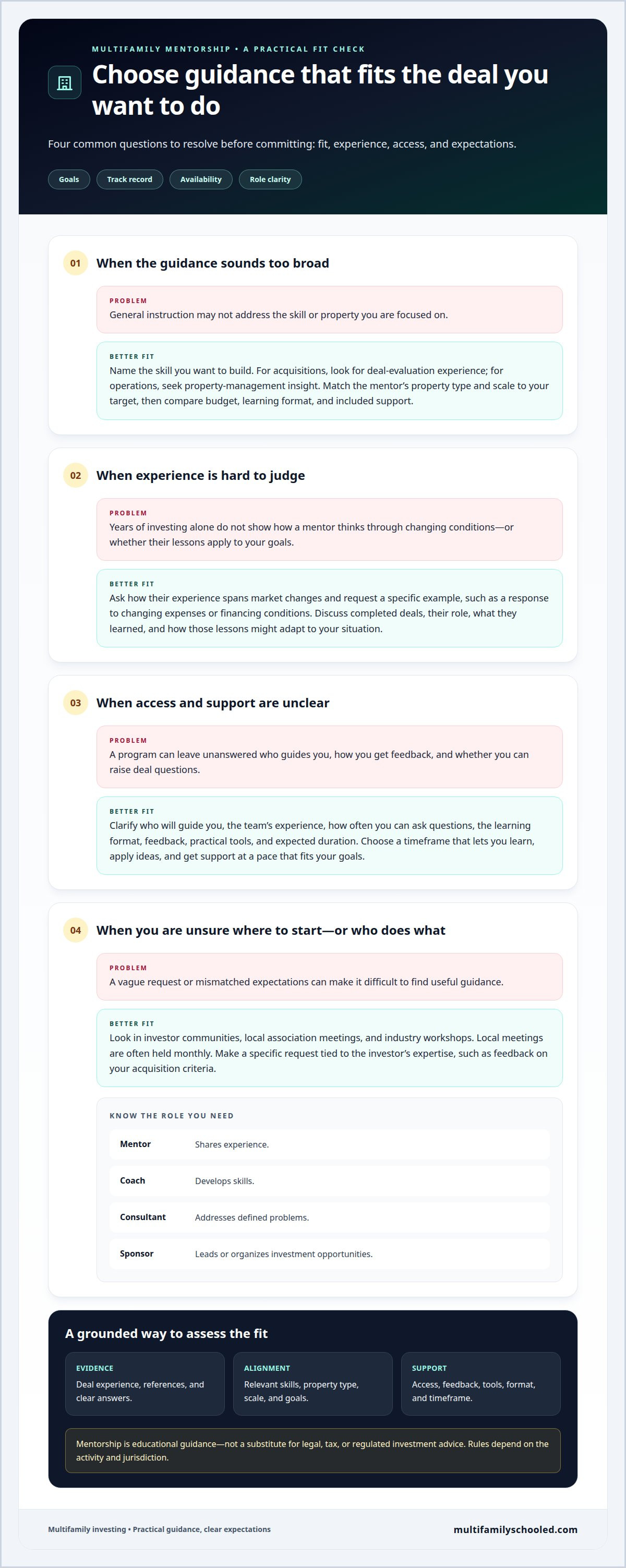
To decide how to choose a multifamily mentor, first identify the skill you want to develop. For acquisitions, look for experience evaluating deals; for operations, seek insight into property management and working with managers. Match the mentor’s property type and scale to your target. Consider your budget, the learning format, and the support included. Avoid paying for broad instruction that doesn’t address your immediate goals.
-
Assess Experience Across Market Cycles
Ask how the mentor’s investing experience spans changing market conditions. Look for a mentor with experience across changing market conditions, and ask what decisions that experience taught them to make. Discuss a specific example, such as responding to changing expenses or financing conditions. Look for thoughtful perspective, useful professional connections, and regular check-ins that help you stay accountable to your own investment goals.
-
Compare Mentoring Team Availability
Ask who will guide you, what experience the team brings, and how often you can raise deal questions. A useful program explains its learning format, feedback, and practical tools, as well as its expected duration. There’s no single ideal length: choose a timeframe that lets you learn, apply ideas, and get support at a pace that fits your goals.
-
Reach Out to Experienced Investors
Attend local investor association meetings, often held monthly, or connect with professionals at industry workshops. Make a specific request tied to the investor’s expertise, such as feedback on your acquisition criteria. As you consider how to choose a multifamily mentor, distinguish guidance from other roles: mentors share experience, coaches develop skills, consultants address defined problems, and sponsors lead or organize investment opportunities. Clarify expectations before proceeding.
Benefits of multifamily real estate mentorship
Mentorship can turn investment questions into clearer decisions. Use these steps to see how it can support your practical investing process.
- Bring a current decision to each discussion, such as whether an apartment’s income can support its operating costs. A mentor can help identify assumptions, unanswered questions, and potential pitfalls before you commit. That perspective won’t remove investment risk, but it can sharpen your analysis and help you avoid costly mistakes. Multifamily errors can cost investors hundreds of thousands of dollars.
- Ask your mentor to challenge your first interpretation of a deal. If projected income looks attractive, for example, examine the expenses, vacancy assumptions, and planned improvements behind it. A second perspective can reveal which assumptions need stronger support. It also helps you develop strategic thinking instead of relying on a single calculation or quick impression.
- Use regular check-ins to turn broad goals into specific next steps. At the start of a meeting, name the task you planned to complete, such as reviewing a property’s operating statements. Then discuss what you learned and what remains unresolved. This routine builds accountability and helps keep your real estate investing work moving between conversations.
- Learn with peers as well as an individual mentor. In an accountability group, students can compare approaches to a shared challenge, such as evaluating renovation assumptions or organizing due diligence. One person’s question may surface a risk others overlooked. Peer support adds practical viewpoints, while respectful discussion helps everyone explain and test their reasoning.
- Apply each lesson to a repeatable process. After discussing a potential acquisition, write down the criteria you used, the assumptions that changed, and the next action. Revisit your notes when analyzing another property. Over time, this practice helps you recognize patterns, ask more precise questions, and make decisions with structure rather than guesswork.
Evaluating a mentor’s multifamily investing background
Use documented deal experience, references, and clear answers to assess a mentor’s record. Ask focused questions before committing, then compare the evidence with your investing goals.
-
Ask Questions Before Hiring
Ask which multifamily deals the mentor has completed, what role they held, and what they learned. Request examples that match your target property type and experience level. Chris and Jacob each began with a 90-unit apartment building, while Ivan’s first two properties were each six units. Ask how the mentor would adapt lessons from their deals to your situation, rather than treating one success story as a blueprint.
-
Check Reviews, References, and Complaints
Look for detailed reviews that describe the guidance received, not just general praise. Request references from former students or partners, then ask what support they actually received and how communication worked. Compare recurring concerns in reviews and complaints with the mentor’s explanations. A single comment may lack context, but consistent reports of unclear expectations, limited access, or unresolved issues deserve closer attention.
-
Compare Deal Records
Ask for a clear account of deal size, property type, responsibilities, and outcomes. Distinguish properties the mentor owned or operated from deals where they held another role. A record focused on smaller properties, for example, may not demonstrate experience with larger apartment acquisitions. Check whether their examples show relevant skills, such as evaluating income, expenses, financing, or operations. Specific details make claims easier to assess.
-
Test the Fit With Your Goals
Before hiring, explain the property type you’re pursuing and the decisions you need help making. Ask how the mentor would structure feedback on a sample deal, such as reviewing the assumptions behind projected income. Notice whether the response is specific or relies on broad promises. Choose someone whose examples and teaching approach connect directly to your goals and next steps.
What is the difference between a multifamily mentor, coach, consultant, and sponsor?
These roles offer different kinds of support. Identify the help you need before agreeing to a relationship or paying for guidance.
- Choose a mentor for ongoing perspective. A mentor shares lessons from their investing experience and helps you think through decisions over time. When weighing an apartment deal, for example, they might help examine your assumptions and identify questions you missed. The focus is your judgment and growth, not simply completing a task for you. Clarify how often you’ll meet and what guidance the relationship includes.
- Choose a coach for structured development. A coach typically helps you pursue defined learning or performance goals through instruction, practice, and accountability. You might aim to improve your deal-analysis process, then review your progress in planned sessions. Ask what skills the coaching addresses, how feedback works, and what you’re expected to complete between meetings. This structure can suit learners who want a clear process.
- Choose a consultant for a defined problem. A consultant provides focused expertise on a specific question or project, rather than an ongoing relationship centered on your broader development. You might need an analysis of operating assumptions for a property you’re evaluating. Agree on the scope, deliverables, and timeline before work begins. If you need continuing guidance across multiple decisions, a single consulting engagement may not fit.
- Understand a sponsor’s role before discussing a deal. In real estate, a sponsor generally leads or organizes an investment opportunity, while a mentor or coach focuses on guidance. Responsibilities and arrangements can vary, so distinguish educational support from participation in a transaction. Ask what role the person would hold, what decisions they control, and how their interests relate to yours. Don’t assume a sponsor relationship includes personal coaching.
- Match the role to your immediate need. Write down the decision you’re facing and the support you want. For long-term perspective, seek mentorship; for skill-building, consider coaching; for a defined analysis, consider consulting. If you’re discussing a specific investment, clarify sponsorship responsibilities separately. This distinction helps you compare expectations and avoid paying for a role that doesn’t address your goal.
Multifamily Schooled: Mentorship Program
Multifamily Schooled’s Mentorship Program can help you turn multifamily investing questions into a structured learning plan. It focuses on helping investors learn how to find and purchase apartment buildings, using a system designed around a 90-day timeline.
Choose the format that fits your next step. Live Workshops and Online Challenges provide structured learning, while MFScout.ai supports deal-finding, analysis, and capital-raising. These resources can help you build practical skills and apply them to your apartment-investing goals.
Review the program details and consider how its guidance, learning format, and tools align with your priorities. If you’d like to discuss whether the Mentorship Program fits your goals, contact Multifamily Schooled.
Turn Your Next Investment Goal Into a Learning Plan
Your next move doesn’t need to be a major commitment. Choose one skill to strengthen, such as assessing an apartment opportunity or building confidence in investment decisions. Then define what progress would look like and what kind of guidance could help. A thoughtful answer to how to choose a multifamily mentor starts with your own direction, not someone else’s success story.
Give yourself space to compare your priorities with the support you’re considering. The right learning relationship should help you ask better questions and make informed decisions, while leaving ownership of those decisions with you. As your goals evolve, revisit what you need from guidance and adjust your learning plan accordingly.
If you’re ready to explore a next step that fits your goals, contact Multifamily Schooled. Keep moving forward with focus, curiosity, and confidence in the decisions you make.
Frequently Asked Questions
Are paid mentorship programs worth it?
Paid mentorship can be worthwhile when practical support fills a specific gap that self-study alone can’t address. Before enrolling, list what you expect to receive, such as deal feedback, scheduled coaching, learning materials, or peer discussions. Compare those features with your goals and budget, not a promised outcome. A program may not suit you if you need basic terminology or can’t make time to apply its guidance.
How do I know if I’m ready for a mentor?
You’re ready when you can describe what you want to learn and act on constructive feedback. You don’t need to have completed a multifamily deal first. You might want help understanding property financials or organizing your acquisition process. Set aside time to prepare questions, review lessons, and follow through on next steps. If your goal is unclear, start by identifying the decisions you want to make more confidently.
What are the risks of choosing the wrong mentor?
A poor fit can cost time, money, and confidence without meeting your learning needs. Advice based on different property types or investing roles may not transfer well to your situation. You might also become overly reliant on someone else’s judgment instead of developing your own process. Define the support you expect, how you’ll assess progress, and which decisions remain yours before entering a mentorship relationship.
What qualifications should a multifamily real estate mentor have?
Look for relevant multifamily investing experience and the ability to explain decisions clearly, not just impressive titles. A useful mentor can describe their role in acquisitions, operations, or financing and explain how those lessons apply to your goals. Their teaching should make complex ideas understandable and invite thoughtful questions. Focus on practical expertise and communication fit rather than assuming one credential alone proves mentoring ability.
How can I verify a multifamily mentor's track record and investment results?
Ask the mentor to distinguish completed investments from projected deals and explain their role in each example. Compare the timeline, property type, and stated outcome with supporting records or accounts from people involved. References can clarify what the mentor contributed and how results were measured. Look for consistent, specific explanations rather than relying on promotional claims or a single success story.
What experience should a multifamily mentor have in my target market and property size?
Prioritize experience that matches the decisions you’ll face, including local market conditions, property operations, and the scale of the buildings you’re evaluating. If the mentor’s deals differ from your target, ask which lessons transfer and where the differences matter. Operating assumptions for a smaller building, for example, may not fit a larger property. The mentor should explain those distinctions clearly and connect them to your investment plan.