

How to assess what an apartment investing mentorship should teach
A mentor’s value is measured by what you learn to do, not by how inspiring the pitch sounds. An apartment investing mentorship program should teach you how to find and assess deals, understand acquisition decisions, and evaluate cash flow. Its value also depends on the mentor access, feedback, and communication the program provides.
It’s reasonable to expect practical guidance, not just big-picture motivation. Apartment investing involves decisions about a property, its finances, and the steps needed to move a potential deal forward. A useful mentor makes those decisions easier to understand and gives you a way to apply what you learn.
In this guide, you’ll learn what real estate mentors do, how to assess whether their teaching covers apartment acquisitions and cash flow, and how to weigh a paid program’s value. You’ll also get a straightforward framework for comparing a program’s lessons with the skills and support you need for your next step.
Key Takeaways
- Look for mentorship that includes practical guidance, clear communication, and feedback you can apply to real investing decisions.
- Assess whether the teaching walks you through finding apartment deals, evaluating acquisition choices, and understanding cash flow.
- Compare a paid program’s curriculum and mentor access with the specific skills you need to build next.
- Use a simple framework to spot gaps between a program’s promises and the support it actually describes.
What does a real estate mentor do?
- Define the skill you want a real estate mentor to teach. An agent may need help improving client conversations or understanding a transaction workflow. An investor may need guidance evaluating a property, planning an acquisition, or reviewing its financial assumptions. Write down one real decision you want to handle better, then use it to focus each mentoring conversation.
- Build a relationship before asking a real estate influencer for mentorship. Follow their work, attend an event, and ask a thoughtful question about a specific idea they shared. Offer value through relevant experience, useful feedback, or a practical introduction. Then make a clear, modest request, such as discussing one investing challenge. A relationship gives the mentor context for your goals.
- Choose a structure that matches how you learn. One-on-one mentorships often involve recurring calls, as-needed check-ins, and occasional meetings. Real estate mentorship groups may be free or require a membership fee, and typically include 10 or fewer investors. In a group, bring a deal question or decision for discussion. In one-on-one sessions, track action items between conversations.
- Compare mentorship with an apprenticeship before committing. Real estate apprenticeships may involve job shadowing, a structured internship, or part-time employment, bringing learning closer to day-to-day work. Some arrangements compensate a mentor with a share of profits from an apprentice’s early investment deals. Understand the responsibilities and profit-sharing terms before agreeing.
- Set expectations for guidance and accountability. A mentor doesn’t need to be 100 steps ahead; someone five steps ahead may offer practical, relevant lessons. Agree on what you’ll work through and how you’ll follow up. One investor described a program without an accountability coach checking in with students weekly. Ask yourself whether the structure supports consistent action toward becoming a successful real estate investor.
Apartment acquisition and cash-flow strategies
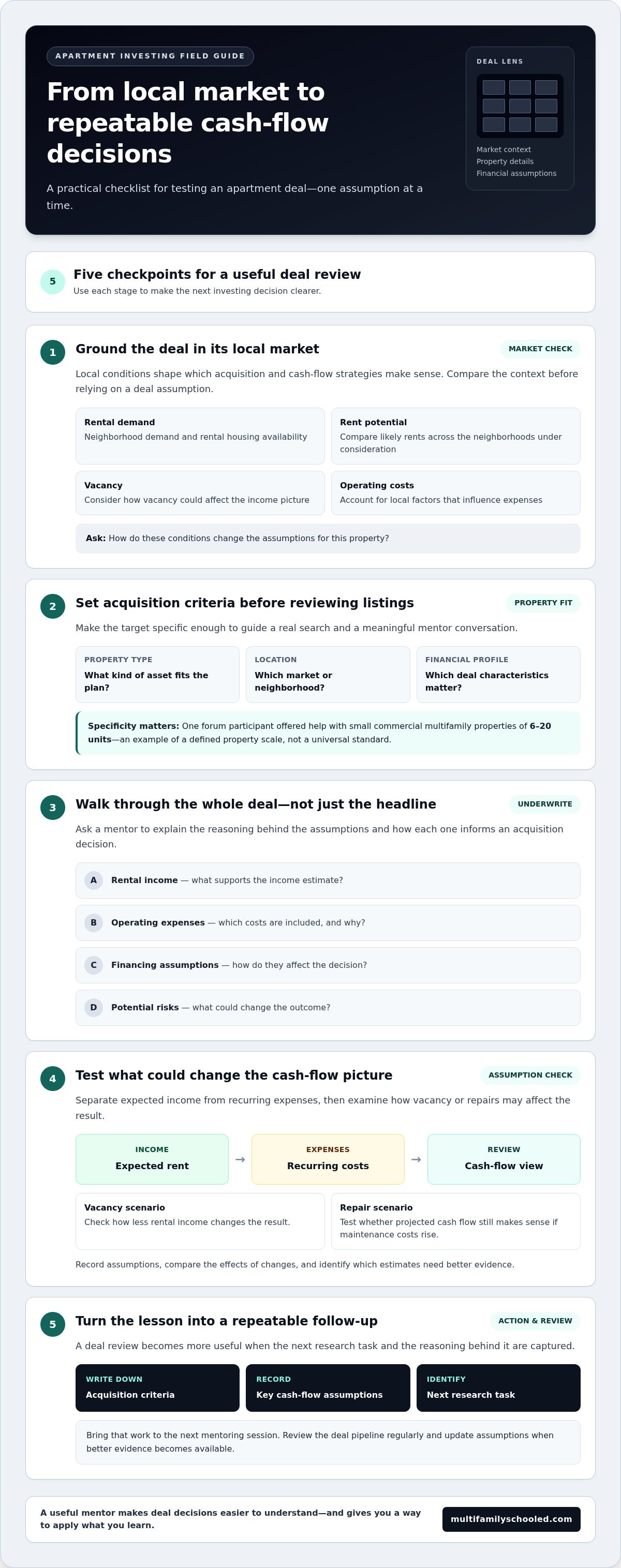
Local conditions shape which acquisition and cash-flow strategies make sense. A mentor’s advice should account for local rents, vacancy, operating costs, and buyer demand. For example, compare rent potential and expenses in two neighborhoods before deciding which property deserves closer analysis.
- Choose a target market and explain why it fits your investing plan. Compare neighborhood demand, rental housing availability, and factors that influence operating costs. Then ask a mentor to show how those conditions affect deal assumptions. Networking with local investors can add context about property types and market activity, but test each claim against the deal’s numbers.
- Set clear acquisition criteria before reviewing listings. Define the property type, location, and financial characteristics that matter to your plan. A forum participant offered help with small commercial multifamily properties of 6-20 units. That example shows why mentorship should address a specific property scale, not only broad real estate concepts.
- Work through a sample deal from initial review to an acquisition decision. Ask the mentor to explain how they assess rental income, operating expenses, financing assumptions, and potential risks. For example, test whether projected cash flow still makes sense if maintenance costs rise. Record each assumption to see which changes have the greatest effect on the decision.
- Make cash-flow analysis repeatable instead of relying on a single headline number. Separate expected rental income from recurring expenses, then examine how vacancy or repairs could change the result. Ask the mentor to explain the reasoning behind each estimate. Review your deal pipeline regularly to update it and identify assumptions that need better evidence.
- Turn each lesson into an action and a follow-up. After reviewing a property, write down the acquisition criteria, key cash-flow assumptions, and next research task. Bring that work to your next mentoring session. If structured guidance would help you apply these steps, explore the apartment investing mentorship program.
Evaluating paid mentorship programs
- Separate the mentorship fee from your property budget. A fee is not automatically tax deductible; its treatment depends on applicable tax rules and the expense’s purpose. Keep the program description, payment records, and notes on how lessons relate to your investing activity. These details help you assess the expense accurately.
- Match the mentor’s experience to your target deals. Look for demonstrated apartment acquisition experience and the ability to explain how decisions were made, including risks and cash-flow assumptions. A prospective investor doesn’t need a mentor 100 steps ahead. Someone five steps ahead may offer practical guidance that fits your current stage.
- Connect experience to the property scale you plan to pursue. One forum participant said their group sought a mentor actively doing apartment deals of 100+ units. Treat that as an example of a specific criterion, not a universal standard. Your mentor’s experience should make sense for your intended asset type and acquisition goals.
- Compare access and communication before committing. Find out whether instruction comes directly from the main mentor, through group sessions, or in another format. Then match the communication style to your learning needs. If you need feedback on deal analysis, for example, prioritize a structure that lets you discuss your assumptions and apply corrections.
- Review the program in a clear sequence. First, compare its curriculum with the skills you want to build. Next, understand the enrollment process, communication format, and participation requirements. Finally, decide whether the structure supports your next investing steps. A strong fit connects what you’ll learn with a practical action plan.
Real estate mentorship programs can range from free to thousands of dollars per month. Check whether you’ll have direct access to the main mentor and what communication the program offers.
What do apartment investing mentorship programs teach?
- Check whether the curriculum starts with a repeatable deal-screening process. A useful lesson shows how to compare a listing with your investment criteria, identify missing information, and decide whether further analysis makes sense. For example, practice rejecting a property outside your target market. This builds discipline before you spend time on detailed underwriting.
- Look for instruction in apartment underwriting. Work through a sample property and trace each assumption to its source, including rent estimates, expenses, and financing terms. Then test how changing one assumption affects projected performance. The goal is to understand the model’s logic, not simply copy a spreadsheet or accept a projected return.
- Expect the program to explain due diligence as a sequence of tasks. For a sample acquisition, identify the property records, physical conditions, and operating details that need review. Connect each finding to a decision, such as revising an assumption or investigating further. A useful exercise teaches you to organize questions and evidence before moving toward a purchase.
- Assess whether lessons cover the people and process behind an acquisition. A case study might map how an investor communicates with a seller, lender, attorney, and other transaction participants. Ask how the program explains each role and the decisions involved. The lessons should clarify your responsibilities without suggesting that a mentor replaces qualified professionals.
- Prioritize implementation. After a lesson, turn the concept into a task, such as screening a listing, documenting an assumption, or summarizing a deal for feedback. An apartment investing mentorship program is more useful when instruction connects concepts to repeatable actions. Build your own learning plan around the skills you still need to practice, then explore structured mentorship for apartment investing.
When comparing paid real estate investing mentorship programs, check whether you’ll have direct access to the main mentor and what communication the program offers.
Multifamily Schooled: Mentorship Program
Multifamily Schooled’s Multifamily Mentorship Program is a natural next step if you want structured guidance applying apartment investing concepts. It focuses on learning to find and purchase apartment buildings, connecting deal evaluation with practical acquisition steps.
The system is designed to help investors learn this process within 90 days. Live Workshops and Online Challenges offer additional ways to work through multifamily investing topics, while Deal Finding Software supports the search for potential opportunities. Choose the format that fits the skill you’re building, whether that’s spotting a deal or improving your acquisition analysis.
If you’re ready to explore mentorship as your next learning step, visit multifamilyschooled.com.
Turn Your Learning Into the Next Move
Your next step is to turn what you’ve learned into a focused investing plan. Write down the property type you’re pursuing, the decisions you need help making, and the guidance that would help you act with more clarity. Use that list to assess whether an apartment investing mentorship program fits your goals and learning style.
For structured learning, Multifamily Schooled offers its Multifamily Mentorship Program, Live Workshops, and Online Challenges. Each provides a different way to engage with apartment investing education, so consider which format fits the work you want to do next. Build momentum by choosing one clear learning goal and putting it into practice.
Contact Multifamily Schooled to explore mentorship, and take your next step toward investing with greater purpose.
Frequently Asked Questions
How much do multifamily real estate mentorship programs cost?
Program fees vary with the format, mentor access, curriculum, and included resources. A group learning experience and direct coaching can involve different levels of support. Compare what participation includes, how long access lasts, and whether feedback is part of the program. For a specific program, pricing depends on its format, access, and resources, and is provided after a quote request.
How can I compare apartment investing mentors and programs?
Compare the teaching with a real task you need to complete. For example, bring a sample listing and assess whether the program helps you identify missing information, explain your assumptions, and decide what to research next. Also compare how instruction and feedback are delivered. A clear fit connects the mentor’s relevant apartment experience with practical learning you can apply independently.
Do apartment investing mentorship programs provide deal or financing support?
Some programs offer education or tools to help investors identify potential deals, but that is not the same as arranging a purchase or supplying financing. Multifamily Schooled’s Deal Finding Software supports investors as they learn about apartment deals. Multifamily Schooled does not provide direct property brokerage or investment capital. Treat deal analysis and financing as separate decisions, and understand what support a program provides.
What are the risks and red flags of real estate mentorship programs?
Watch for pressure to enroll quickly, vague descriptions of instruction, or claims that don’t explain the work and conditions involved. Before committing, read the terms, identify who provides guidance, and understand what participation requires. Don’t mistake a projected return or sample deal for a promised outcome. Keep your own records and make investment decisions based on evidence, not urgency.
What steps are involved in joining an apartment investing mentorship program?
Compare the curriculum with the skills you want to build, then review the enrollment process, communication format, and participation requirements. Decide whether the program offers the access and practical support you need for your next investing steps.



