

Legal Requirements for Real Estate Syndication: The 2026 Investor’s Guide
What if the only thing standing between you and a 100-unit portfolio isn't the deal itself, but a single missing signature on a Form D? You've found the property. The investors are ready to wire funds. Yet, the fear of an SEC audit or a massive legal penalty keeps you paralyzed. Mastering the legal requirements for real estate syndication is the ultimate superpower for any serious investor. It's the professional foundation that allows you to scale with total peace of mind. You shouldn't have to guess between a 506(b) or 506(c) structure while risking your entire future on a technicality.
We understand the frustration of staring at $50,000 legal estimates without knowing what you actually need. You want to move fast, stay protected, and keep your compliance costs under control. This guide will show you how to master the essential legal frameworks to raise capital safely and scale your multifamily empire with confidence. We'll provide a clear roadmap of required documents, explain the 2026 accredited investor updates, and give you the tools to speak to investors legally. It's time to stop guessing and start building your legacy on a rock-solid foundation.
Key Takeaways
- Stop treating your deals like hobbies and discover why the SEC views pooling capital as a securities offering that requires a professional foundation.
- Master the specific legal requirements for real estate syndication by choosing between the privacy of Regulation D 506(b) and the advertising power of 506(c).
- Shield your assets and your future with the "Big Three" essential documents, including the Private Placement Memorandum and a bulletproof Operating Agreement.
- Execute a proven 5-step framework to form your entity and raise capital without the legal paralysis that stops most investors from closing.
- Move from student to closer by leveraging a systematic approach to compliance that turns legal complexity into predictable cash flow.
Why Legal Compliance is Your Secret Weapon for Scaling Multifamily Deals
Legal compliance is not a hurdle. It is the professional foundation that allows you to scale to 100+ units with total peace of mind. Many investors view legal fees as a burden, but successful syndicators see them as a competitive advantage. When you pool capital for an apartment complex, you aren't just buying real estate. You're selling a security. Handshakes and verbal agreements don't work in this league. High-net-worth partners expect a sophisticated legal structure before they wire a single dollar. If you want to attract big capital, you must demonstrate that you've mastered the legal requirements for real estate syndication.
Compliance is your "trust factor." It proves you're a professional who respects the law and protects your partners. In the 2026 landscape, federal oversight is more intense than ever. Most professional sponsors utilize a private placement exemption to raise capital efficiently. This legal path allows you to avoid the massive costs of public registration while staying completely within SEC guidelines. It's the secret to raising millions without the headache of public filings.
To better understand how these deals are structured and the fees involved, watch this helpful breakdown:
The SEC and the Definition of a Security
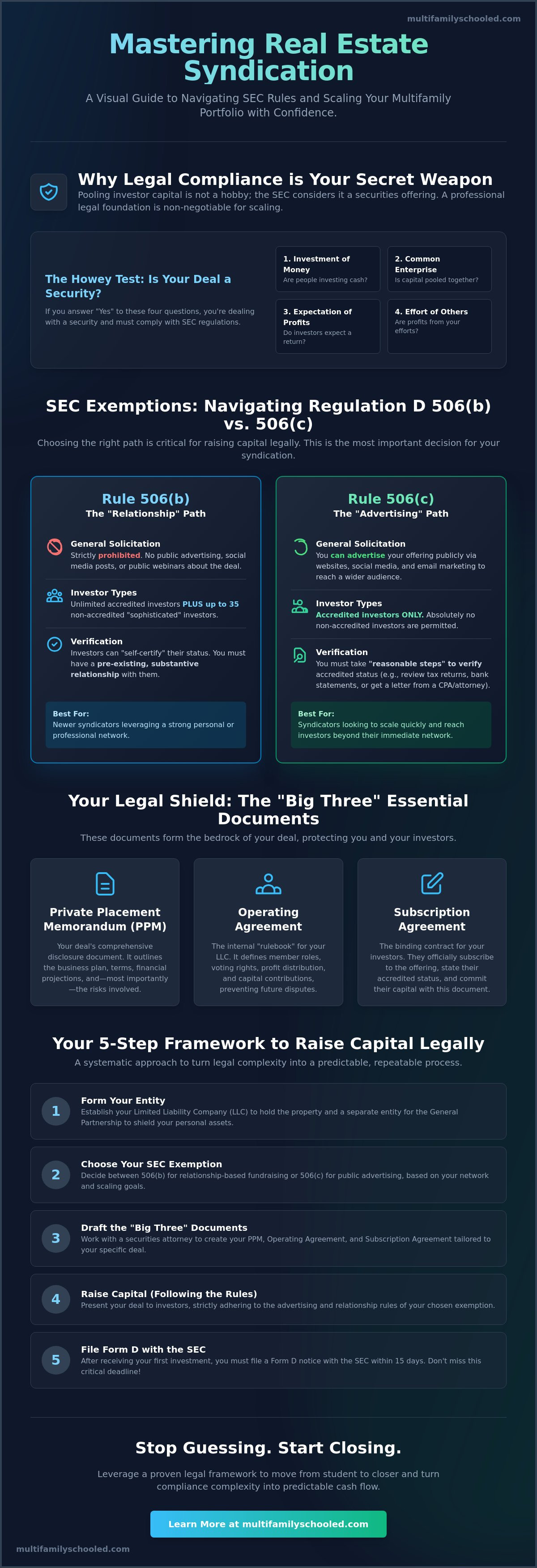
The SEC uses the Howey Test to determine if your deal is a security. It's a simple four-part check. Are people investing money? Is there a common enterprise? Do they expect profits? Is the profit generated by your efforts? If the answer is yes, your multifamily deal is an investment contract. Non-compliance is fatal to your career. It triggers the "right of rescission," which means investors can demand every penny of their money back if the deal goes south. You could face heavy fines or even be barred from the industry. Don't risk your empire on a technicality. Use a proven system to ensure every document is bulletproof.
Interstate vs. Intrastate Offerings
Federal rules apply the moment you cross state lines. If your property is in Texas but your investor lives in Florida, you're in federal territory. Even if you stay within one state, you must navigate Blue Sky Laws. Currently, 46 out of 50 states require a specific notice filing for Regulation D offerings. Most sponsors in 2026 prioritize federal exemptions for maximum scalability. This allows you to pull capital from across the country without being trapped by varying state-level restrictions. Mastering these legal requirements for real estate syndication is how you move from a local landlord to a national powerhouse. Stop guessing and start closing with the confidence of an expert.
SEC Exemptions: Navigating Regulation D 506(b) vs. 506(c)
Regulation D is your ticket to the big leagues. It's the primary framework for meeting the legal requirements for real estate syndication. Most syndicators choose between Rule 506(b) and Rule 506(c). These exemptions exist because the SEC understands that private deals shouldn't carry the same burden as public stocks. However, the SEC regulations for real estate syndication make it clear that you must follow these rules to the letter to stay protected. One wrong move can freeze your capital and destroy your reputation. You need to know which path leads to your first 100 units.
The Rule 506(b) Path: Building on Relationships
Rule 506(b) is the traditional path for those starting their multifamily journey. It's often called the "quiet" exemption. You can't advertise. No social media posts. No public webinars. You must have a pre-existing, substantive relationship with every investor before you present the deal. This rule allows for an unlimited number of accredited investors and up to 35 non-accredited, sophisticated investors. A sophisticated investor is an individual who possesses the financial and business experience necessary to evaluate the risks and merits of an investment. This is the perfect starting point for those building their first portfolio through a warm network of friends and family.
The Rule 506(c) Path: Advertising Your Deal
If you want to scale fast, Rule 506(c) is your engine. This rule allows for general solicitation. You can use Facebook ads, LinkedIn, and your website to find capital. The trade-off is strict. Every single investor must be an accredited investor. You can't just take their word for it. In 2026, you must take reasonable steps to verify their status through third-party services or tax documents. A March 2025 SEC no-action letter recently simplified this for those making a minimum investment of $200,000, creating a safe harbor that reduces your administrative burden. This makes 506(c) the dominant choice for sponsors who want to raise millions from a global audience.
Choosing the wrong exemption can kill your deal before it starts. Beginners should stick to 506(b) to leverage personal trust. Experienced closers use 506(c) to tap into the wider market. If you're ready to master these frameworks and stop guessing, our mentorship program shows you exactly how to structure your winning deals. Don't let legal confusion stop your momentum. Pick your path and start raising capital with total confidence.
The "Big Three" Legal Documents Every Syndicator Needs
Paperwork is your protection. In the high-stakes world of multifamily investing, your legal documents are the only thing standing between a successful exit and a devastating lawsuit. You can't rely on a "good feeling" or a handshake when millions of dollars are on the line. Mastering the legal requirements for real estate syndication means arming yourself with three specific, bulletproof documents. These aren't just administrative tasks. They are the structural beams of your entire empire. If you skip a step here, you aren't just risking a deal. You're risking your future. Never use a template you found on a random website. Those generic forms won't protect you when the market shifts or an investor gets cold feet.
Anatomy of a Private Placement Memorandum (PPM)
The PPM is your ultimate shield. This massive document tells your investors exactly what they're getting into. It covers every possible risk factor, from interest rate hikes to local economic downturns. You must clearly outline the "use of proceeds" so everyone knows where every dollar goes. It also discloses any potential conflicts of interest. A professional PPM manages investor expectations before they sign. It ensures that if things get difficult, you can point to the document and prove you provided full disclosure. Every PPM must be tailored to your specific multifamily asset. A generic document won't cover the unique nuances of a 150-unit complex in a specific submarket.
Structuring the LLC and Operating Agreement
Your Operating Agreement is the playbook for your business. It defines who makes the decisions and who gets paid. Most syndicators use a manager-managed structure. This gives you, the General Partner (GP), the authority to run the day-to-day operations without needing a vote for every minor repair. Your Limited Partners (LP) provide the capital but remain passive. This document also defines the "waterfall." This is the specific formula that determines how profits are split between you and your investors. It’s the core of your financial relationship. If you're ready to build a professional structure, check out our Multifamily Tool Kit for the resources you need to organize your deals like a pro.
The final piece is the Subscription Agreement. This is the formal "yes" from your investors. It’s where they verify their accredited status and commit to the investment. Together, these "Big Three" documents satisfy the legal requirements for real estate syndication and give you the confidence to lead. Don't let the cost of legal fees scare you. The cost of a poorly drafted agreement is always higher. Invest in your foundation now so you can scale to thousands of units later. Stop acting like a student and start operating like a CEO.
Staying Compliant: A 5-Step Legal Framework for Raising Capital
Success in the multifamily world isn't about luck. It's about a repeatable system. You need a clear workflow to ensure you meet every one of the legal requirements for real estate syndication without slowing your momentum. Most beginners fail because they try to "wing it" or wait until the last minute to think about compliance. By then, it's too late. You've already crossed a line you can't uncross. Follow this five-step framework to raise capital with total authority and zero fear.
- Step 1: Choose Your Exemption. Decide between 506(b) or 506(c) before you talk to a single investor. This choice dictates your entire marketing strategy.
- Step 2: Form Your Legal Entity. Set up your LLC or LP. Most pros choose tax-friendly jurisdictions like Delaware or Wyoming to maximize protection.
- Step 3: Draft Your Documents. Hire a specialist to create your PPM, Operating Agreement, and Subscription Agreement. Don't cut corners here.
- Step 4: File Form D. You must file with the SEC within 15 days of your first sale. Don't forget the Blue Sky filings required by 46 different states.
- Step 5: Maintain Records. Document every communication. Your records are your only defense if an auditor ever knocks on your door.
Finding the Right Syndication Attorney
A general real estate lawyer is not enough for this job. You need a securities expert who lives and breathes Regulation D and the legal requirements for real estate syndication. In 2026, legal setup costs typically range from $15,000 to over $50,000. While that sounds high, it's the price of a secure empire. Ask your attorney how they handle the latest SEC trends and "bad actor" disqualification checks. If they can't give you a straight answer, find someone else. You're paying for their ability to keep you out of court, not just for a stack of paper.
The Importance of Record Keeping
Your "investor log" is your best defense in an audit. If you're using Rule 506(b), you must prove you had a pre-existing substantive relationship before the deal existed. This means tracking dates, phone calls, and meetings. Don't try to manage this with a messy spreadsheet. Use professional software like Real Estate Radar to manage your deal data and investor communications. Keeping pristine records isn't just about compliance. It’s about building a scalable business that high-net-worth partners can trust. If you want to master this system and stop being a student, join our mentorship program today and start closing deals with confidence.
Mastering the Legal Game: How Mentorship Turns Complexity into Cash Flow
You've read the rules. You've seen the frameworks. Now, it's time to stop being a student and start being a closer. Legal paralysis is the number one deal-killer for aspiring syndicators. Most investors get stuck in the "what ifs" and never actually make an offer. They fear the SEC or worry about a document they don't understand. But mastering the legal requirements for real estate syndication isn't just about staying out of trouble. It's about gaining the confidence to move with massive speed. When you know your structure is bulletproof, you can speak to high-net-worth investors with total authority. You stop hoping the deal is legal and start knowing it's a professional offering that protects everyone involved.
Having a mentor who has navigated hundreds of syndications changes everything. It turns a daunting professional process into a systematic, achievable journey. You don't have to guess if your 506(b) relationship log is sufficient or if your PPM covers the right risk factors. You follow a proven path that has already been cleared by experts. This is how you accumulate assets and secure your long-term independence. 2026 is the year to stop watching from the sidelines. The market is ripe for those who are prepared to lead. Stop making excuses and start building your multifamily empire today.
The 90-Day Deal Goal
Most people take years to figure this out on their own. We don't have that kind of time. Our system integrates legal readiness into a high-intensity 90-day mentorship sprint. We show you how to navigate the legal requirements for real estate syndication while you're actively finding and underwritten deals. This isn't a theoretical exercise. It's a practical, results-driven blueprint. You will move from "I think I can do this" to "I am a professional syndicator." If you're ready to stop playing small and start winning big, our Mentorship Program is your gateway to the next level. Let's get your first deal closed in the next 90 days.
Your Future as a Professional Syndicator
Imagine the lifestyle and financial freedom that comes with closing your first major apartment deal. Picture yourself signing the closing documents for a 100-unit building and knowing every step was handled with expert precision. This is the reality for those who master the system. Compliant deal-making is the key to unlocking a more prosperous future for you and your family. Take the first step toward your first building today. Don't let another year pass you by while others seize the current opportunities. Join the 5-Day Multifamily Challenge to start your journey right now. Success is waiting for those who take decisive action.
Your Legacy Starts With a Bulletproof Foundation
Stop viewing legal compliance as a barrier. It is the engine that drives your growth. You now have the roadmap for 506(b) and 506(c) exemptions. You know the specific documents required to protect your investors and your future. Mastering the legal requirements for real estate syndication is what separates the dreamers from the closers. This knowledge gives you the authority to raise millions and scale to hundreds of units without hesitation. It's the professional standard for anyone serious about long-term independence and economic empowerment.
The 2026 market belongs to the prepared. Don't let legal confusion hold you back from the life you deserve. We've built a proven system for commercial real estate mastery that removes the guesswork. Our ecosystem even includes proprietary deal-finding software to help you identify winners fast. It's time to stop being a student and start being a provider for your family. Your first building is closer than you think. You have the tools. Now, you just need the courage to use them.
Apply for the Multifamily Mentorship and Find Your Deal in 90 Days. We provide a 90-day deal guarantee to keep you moving at light speed. Take the lead and start your journey today. Your future self will thank you for this decisive action.
Frequently Asked Questions
Do I need a license to start a real estate syndication?
You do not need a real estate license or a broker-dealer license to syndicate a deal as long as you are the "issuer" of the securities. Your compensation must come from your role as a manager or general partner rather than a commission for selling the investment. Following the legal requirements for real estate syndication allows you to raise capital legally without being a licensed broker. However, you must strictly adhere to SEC exemptions to avoid being classified as an unlicensed securities dealer.
What is the difference between an accredited and sophisticated investor?
Accredited investors meet specific financial bars, such as an annual income over $200,000 or a net worth exceeding $1 million excluding their primary residence. As of 2026, individuals with certain professional certifications like the Series 7 also qualify. Sophisticated investors don't necessarily meet these wealth thresholds. They simply have enough financial knowledge and experience to evaluate the risks of the deal. Rule 506(b) allows you to include up to 35 of these sophisticated partners in your multifamily offerings.
How much does it typically cost in legal fees to syndicate a deal?
Professional legal setup for a standard Regulation D offering typically ranges between $15,000 and $50,000. This fee covers the drafting of your Private Placement Memorandum, Operating Agreement, and Subscription Agreement. It also includes your federal and state notice filings. While this is a significant upfront cost, it's the price of building a secure empire. Never try to save money by using generic templates that leave you exposed to lawsuits or audits.
Can I syndicate a property with only 2 or 3 investors?
Yes, you can syndicate a property with any number of investors. If your partners are passive and relying solely on your expertise to generate a return, the deal is a security regardless of the head count. Small groups often use a "joint venture" structure where everyone has an active role, but most professional sponsors prefer the syndication model for better control. It allows you to lead the project while your 2 or 3 partners provide the capital as passive members.
What is a Form D and when do I need to file it?
Form D is a brief notice filed with the SEC that identifies your company and the exemption you are using to raise money. It's not a registration, but it is a mandatory part of the legal requirements for real estate syndication. You must file this form electronically within 15 days of the first sale of securities in your offering. Missing this deadline can trigger unwanted scrutiny and complicate your ability to close future deals with high-net-worth partners.
Can I use a syndication for a single-family home or only apartments?
You can syndicate any type of real estate asset, including single-family home portfolios, self-storage, or mobile home parks. Most professional closers focus on apartments because the larger scale helps absorb the legal and compliance costs more efficiently. A 100-unit building generates enough cash flow to easily handle the $20,000 to $40,000 in annual compliance fees. Single-family homes are possible, but they rarely offer the same explosive growth potential as multifamily assets.
What happens if I raise money without following SEC guidelines?
Raising money illegally triggers the "right of rescission," which gives every investor the right to demand their full investment back immediately. If the deal has already lost money, you are personally liable for the shortfall. You also face heavy fines, civil lawsuits, and the possibility of being barred from the industry for life. Don't gamble with your future. Use a proven system and work with a specialized attorney to ensure every deal is bulletproof from day one.
How long does the legal process take for a typical syndication?
Expect the legal drafting and entity formation process to take between 4 and 6 weeks. This timeline includes the back-and-forth between you and your attorney to tailor the PPM to your specific property. You need this time to ensure all risk factors are disclosed and the profit waterfall is structured correctly. Move fast to find the deal, but move carefully when it comes to the paperwork. A rushed legal process is a recipe for disaster in the 2026 market.



