

How to Structure a Multifamily Syndication Deal, and Vet the Sponsor
What if the headline return is the least useful number in a multifamily syndication? To understand how to structure a multifamily syndication deal, start with the alignment between the sponsor’s authority, your rights as an investor, and the way profits and losses are shared. Attractive projections can’t answer those questions on their own.
If deal documents feel dense, you’re not alone. Terms like general partner, limited partner, preferred return, and promote can make it hard to see who makes decisions, when investors may receive distributions, and what happens if the plan falls short. Read the structure as a whole rather than judging a deal by one projected return.
This guide offers a consistent framework for assessing participant roles, control provisions, investor economics, and risks. You’ll also learn what to examine when vetting a sponsor, from documented responsibilities to the assumptions behind the business plan. By the end, you’ll be better equipped to compare terms, identify open questions, and decide whether an opportunity deserves closer consideration.
Key Takeaways
- Map the asset plan, sponsor and investor roles, and deal economics to understand how the syndication is intended to work.
- When assessing how to structure a multifamily syndication deal, read the governing documents alongside the proposed economics and applicable legal requirements.
- Compare control, distribution rules, reporting, and exit provisions separately so headline returns don’t obscure important terms.
- Vet a sponsor by distinguishing documented experience and past performance from projections and promotional claims.
- Write down the deal’s roles, rights, economics, assumptions, and open questions. Pause if you can’t clearly explain how distributions are allocated.
Why Multifamily Syndication Deal Structure Matters Before You Invest
Before investing, get clear on two things: who controls the deal, and how investors participate in its potential income, decisions, and risks. A multifamily syndication pools capital from multiple investors to acquire or operate an apartment property. The entity, legal relationships, and terminology can vary by offering and jurisdiction, so focus on the documents rather than assuming every deal follows the same template.
That distinction matters. A sponsor may organize and operate the investment, while investors hold economic interests under the arrangement described in the offering documents. Projected returns can help explain the business plan, but they don’t tell you who can make decisions, how distributions are determined, or what rights investors have if the plan changes. Understand the structure before weighing the projections.
For a visual overview of how a fund or syndication may be organized, watch this related discussion:
What the syndication structure determines
The entity, participant roles, and governing documents frame how the investment operates. They help establish who has authority to make decisions and how investors may share in the deal’s economics. These are separate questions: an investor may have an ownership interest without managing daily operations, while a sponsor may manage operations under defined terms. The Real estate syndication overview offers a foundation for understanding common participants and structures.
Structure affects who controls decisions, how economic benefits are allocated, and which protections investors can rely on. Treat this as a practical reading guide, not a promise that every investor has the same rights. The specific offering documents set out the terms, including any limits on authority, approval rights, reporting, and procedures for changes. Identify unclear terms before deciding.
Who typically participates in a multifamily syndication?
A sponsor, sometimes called a general partner, commonly organizes and oversees the deal. Depending on the arrangement, this may include coordinating the acquisition, financing, business plan, and ongoing operations. Limited partners typically contribute capital and hold interests described in the offering documents, without taking on the sponsor’s routine operating role. Titles and responsibilities aren’t universal, so read how the specific deal defines them.
To understand how to structure a multifamily syndication deal, separate decision-making authority from economic participation. Look for who can approve major actions, how investor returns are calculated and distributed, and what happens if performance falls short. A polished projection can’t answer those questions by itself. The structure and its assumptions need to make sense together.
Put the roles and terms into plain language before moving forward: who manages, what investors own, how money may flow, and which rights apply. If you can’t explain those basics clearly, pause and revisit the documents. This turns unfamiliar terminology into a useful framework for comparing opportunities, rather than letting a headline return make the decision for you.
How to Structure a Multifamily Syndication Deal: The Core Components
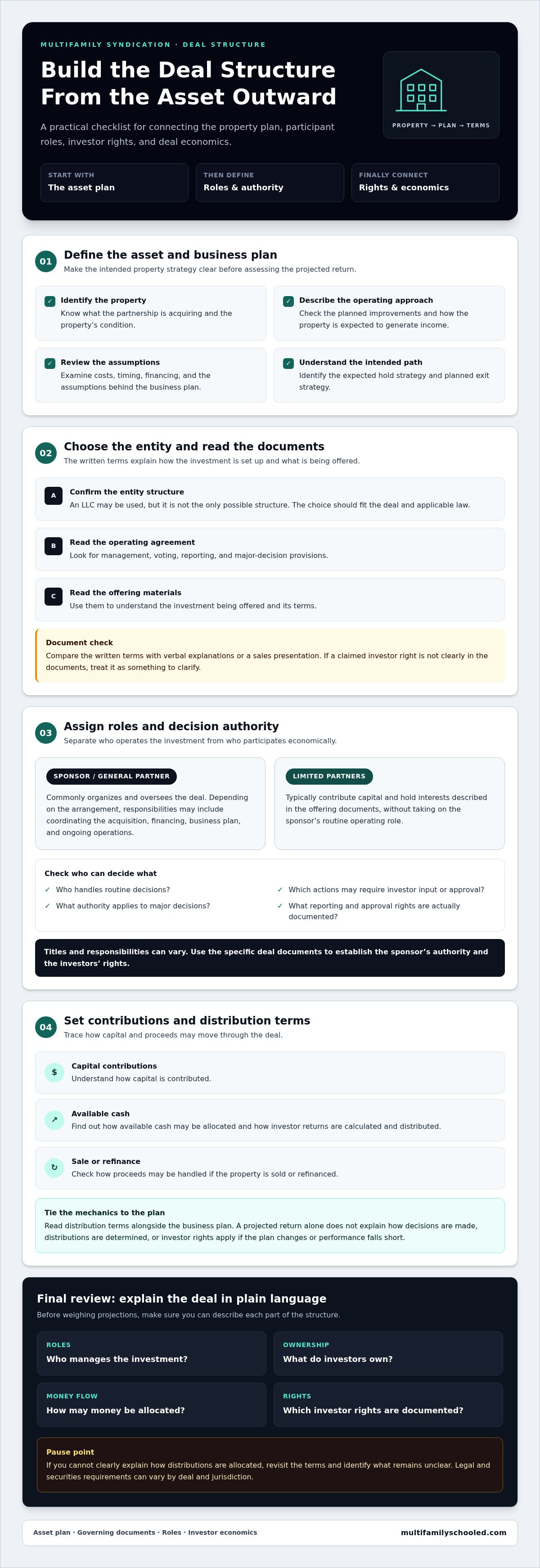
Build the structure from the investment plan outward. First define what the partnership is acquiring and how it intends to operate the property. Then connect each participant’s responsibilities, rights, and potential share of proceeds to that plan. This sequence makes it easier to see whether the legal documents and projected economics describe the same deal.
- Define the asset and business plan. Identify the property, its condition, planned improvements, operating approach, and expected hold and exit strategy. Check the assumptions behind the plan, including costs, timing, financing, and how the property is expected to generate income.
- Choose an entity and governing documents. An LLC may be used, but it isn’t the only possible structure. The choice should fit the deal and applicable law. The operating agreement and offering materials explain how the entity works and what investors are being offered.
- Assign roles and authority. Describe the sponsor’s responsibilities and the investors’ rights. Specify who handles routine decisions and which actions may require investor input or approval.
- Set contributions and distribution terms. Explain how capital is contributed, how available cash may be allocated, and how proceeds may be handled at a sale or refinance. Tie the mechanics to the business plan rather than relying on a headline return.
Set the entity, sponsor authority, and investor rights
The operating agreement commonly sets out an LLC’s management, voting, reporting, and major-decision provisions. Offering materials describe the investment and its terms. Read both closely, then compare them with any verbal explanation or sales presentation. If a conversation suggests investors can approve a major action but the documents don’t grant that right, treat the written terms as something to clarify before investing. Legal and securities requirements can vary by deal and jurisdiction, so don’t assume one structure fits every offering.
Separate authority from participation. A sponsor may have broad responsibility for executing the plan, while investor voting rights may apply only to specified matters. Find the language on decisions such as a sale, refinancing, amendments, or extending the investment period. Don’t infer a right from a title or informal description. The documents define the arrangement.
Map capital contributions, distributions, and the business plan
Show how investor contributions support the plan and what the sponsor is responsible for delivering. Then trace the distribution waterfall in order. A preferred return is a term defined by the offering documents, not a promise that cash will be available or paid. The documents should explain how it’s calculated, whether unpaid amounts carry forward, and what happens next in the distribution sequence.
For example, a hypothetical waterfall might allocate available cash to investors under a stated preference before dividing remaining proceeds between investors and the sponsor. This illustrates mechanics only; it doesn’t predict results. Check whether assumptions about operating costs, reserves, financing, and a potential sale align with the distribution language. Multifamily investing mentorship can help investors build their deal-analysis knowledge.
Compare Multifamily Syndication Terms Without Chasing Headline Returns
A projected return is an assumption, not a guaranteed investor outcome. Treat it as a result that depends on the business plan, financing, expenses, timing, and market conditions. Then compare the terms that determine how decisions and proceeds are handled. A consistent framework helps you see where opportunities differ, even when their projections look similar.
| Category | Compare in the documents | Question to ask |
|---|---|---|
| Control | Sponsor discretion, investor voting rights, and major decisions | Who can approve or make key changes? |
| Distributions | Preferred return terms, waterfall order, and timing | How is available cash allocated, and under what conditions? |
| Reporting | Financial updates, operating reports, and delivery schedule | What information will investors receive, and how often? |
| Exit | Sale, refinancing, transfer restrictions, and possible extensions | What could affect the timing or availability of proceeds? |
Use the same categories for every offering. Record the exact document language, not just a presentation summary. The comparison can reveal a mismatch: a forecast may describe regular distributions, for example, while the documents make distributions dependent on available cash and sponsor discretion.
Compare distribution waterfalls and sponsor incentives
A distribution waterfall describes the order in which available cash or sale proceeds may be allocated. A preferred return may set a priority in that sequence, but it doesn’t guarantee payment. Check how it accrues, whether unpaid amounts carry forward, and what conditions must be met before other allocations occur.
A promote or carried interest can give the sponsor a share of profits under specified conditions. Read the thresholds and calculation method to understand how that incentive interacts with investor distributions. Don’t assume a particular split or waterfall is standard. Compare what each offering actually says, including sponsor compensation categories such as acquisition, asset management, or disposition fees if they appear in the documents.
Compare voting, reporting, and exit provisions
Look for which major actions require investor approval and which remain within sponsor discretion. Then review reporting commitments: the type of updates, their frequency, and how financial or operating information is delivered. Clear terms make it easier to understand what visibility to expect after investing.
Finally, examine provisions for transfers, refinancing, a property sale, and extensions to the planned hold. A stated target exit date isn’t a promise of liquidity or a guaranteed timeline. Check what the documents allow if a sale is delayed or market conditions change. These rights and mechanics are central to how to structure a multifamily syndication deal because they shape your practical options as well as the projected economics.
For a more systematic approach to reviewing investment opportunities, multifamily investing mentorship is an educational path to consider. First, make sure you can explain each deal’s control, distribution, reporting, and exit terms in plain language.
How to Vet a Multifamily Syndicator Before Investing
Review the sponsor as carefully as the property. A disciplined diligence process separates documented experience from persuasive marketing, and the written plan from optimistic projections. Work through each step in order. Keep notes and connect each claim to evidence in the deal materials or a verifiable record.
- Verify relevant experience. Look for multifamily experience that matches the proposed strategy and property type. Separate completed projects from current investments, and distinguish the sponsor’s direct role from experience attributed to a broader team.
- Examine past performance. Compare stated results with supporting records and the original business plan, where available. Consider how completed deals performed against projected costs, timing, income, and exit assumptions. Past results provide context, not a promise about a new deal.
- Assess alignment. Read how the sponsor’s compensation and investment participation are described. Consider whether the sponsor’s responsibilities, incentives, and role align with the work required by the proposed business plan.
- Review the documents and assumptions. Compare presentation claims with the operating agreement and offering materials. Check assumptions for occupancy, rental income, expenses, financing, and exit timing. Note differences that need explanation.
- Evaluate communication. Look for clear answers, consistent information, and a defined approach to investor updates. A sponsor’s communication during diligence can help you understand how information will be shared once the investment is underway.
Assess experience, execution, and alignment
Focus on evidence, not the volume of claims. A completed property sale, an operating project, and a projected outcome are different things. Ask what the sponsor specifically handled, what changed during execution, and how actual results compared with the original plan. Then check whether the sponsor’s stated responsibilities match the work needed for this deal. Compensation terms should be clear enough to identify potential conflicts and incentives.
Read the documents and test the assumptions
Use offering materials to understand the proposal, then compare key statements with the governing documents. Test the plan: if occupancy rises more slowly, expenses increase, financing terms change, or an exit takes longer, what could that mean for the investment? Flag unclear or inconsistent language for careful review. This is a diligence framework, not legal advice. It helps you identify questions rather than interpret legal obligations.
Use this checklist before making a decision:
- Who has authority over major decisions, and which actions involve investor approval?
- What reports will investors receive, and how often?
- Which assumptions could most affect projected cash flow or the exit?
- What sponsor compensation, related-party arrangements, or other potential conflicts are disclosed?
A multifamily investing toolkit can support an organized learning process as you build your review framework. For continued guidance on evaluating deals and sponsors, explore the multifamily investing mentorship program.
Turn the Deal Review Into a Confident Next Step
A careful review should leave you with more than a stack of documents. It should give you a plain-language picture of who is responsible, what investors can expect, how cash may be allocated, and which assumptions could change the outcome. Put that picture on one page. It gives you a practical way to compare opportunities and makes unanswered questions easier to spot.
Use a repeatable deal-review checklist
For each offering, record the same core details. Keep facts from the deal documents separate from general investing knowledge, your own interpretations, and questions that still need answers. A general explanation of a preferred return, for example, doesn’t establish how a particular offering calculates or distributes it.
- Sponsor: Who is responsible for the plan, and what relevant experience and completed outcomes support the sponsor’s claims?
- Entity and roles: What entity is used, and how do the documents describe sponsor responsibilities and investor interests?
- Investor rights: Which decisions can investors vote on, and which remain within sponsor authority?
- Economics: What do the documents say about contributions, distributions, compensation, and the order of proceeds?
- Assumptions: What occupancy, income, expense, financing, and timing assumptions support the plan?
- Exit and open questions: What terms cover a sale, refinancing, transfer, or delay, and what remains unclear?
Pause if you can’t explain the structure and distribution order in your own words. Revisit the offering materials and resolve the gaps before deciding, rather than relying on a sales summary. Your one-page review isn’t a substitute for professional advice; it’s a tool for keeping the deal’s written terms, your understanding, and your questions organized.
Continue learning before making an investment decision
Education can help you build a stronger process, but it can’t guarantee an investment result. Justin Brennan’s experience provides educational context: he has been active in real estate since 2006, and the company states that he owns 1,200+ units and $200 M+ in multifamily properties across 5 states. Those figures describe his experience, not a forecast or promise of what an investor will earn.
If you’re building your foundation, explore the free apartment investing e-book as an introductory learning resource. For more structured coaching, the Multifamily Mentorship Program is another option. The guarantee to find you a deal in 90 days or give you one applies to the Mentorship Program only. See refund policy for details.
Use what you learn to sharpen your questions, not to rush a decision. If you want to keep developing your approach to how to structure a multifamily syndication deal, explore Multifamily Schooled’s educational resources at your own pace. Clear terms and a repeatable review process put you in a better position to assess the opportunity in front of you.
Build a Deal-Review Habit You Can Trust
The next opportunity is a chance to put your process to work. Before moving forward, make sure you can explain the investment in plain language, identify what remains uncertain, and distinguish written terms from expectations. If you can’t, slow down. A thoughtful pause can be more valuable than a rushed yes.
Learning how to structure a multifamily syndication deal isn’t just about understanding one offering. It’s about building the judgment to evaluate future opportunities with care. Multifamily Schooled has helped 1,000+ students develop their multifamily investing knowledge, and continued education can help you strengthen your own approach.
Explore the resources at your own pace and keep asking clear, practical questions as you learn. Explore Multifamily Schooled’s investing education and take your next step with greater confidence.
Frequently Asked Questions
Is a multifamily syndication the same as a real estate fund?
No. A multifamily syndication often pools investors around a specific property or deal, while a real estate fund may pool capital for investment across multiple properties or opportunities. The terms aren’t mutually exclusive: a fund may use a syndication structure to bring investors together. To understand a particular offering, check whether it targets one asset or a portfolio and how its governing documents define the investment.
Can passive investors vote on major decisions in a multifamily syndication?
Sometimes, but voting rights depend on the offering documents. An agreement might give investors a vote on a sale, a change to the agreement, or replacing a manager, while leaving routine operations to the sponsor. Don’t assume that “passive” means no say, or that ownership automatically grants broad voting power. Find the specific approval provisions and note whether a vote requires a particular investor threshold.
Are returns or distributions in a multifamily syndication guaranteed?
No. Projected returns and planned distributions aren’t guarantees. A property may earn less than forecast or need cash for expenses and reserves, leaving less available to distribute. A preferred return describes a contractual distribution priority if the stated conditions are met, not assured income. If you’re learning how to structure a multifamily syndication deal, distinguish projected performance from enforceable terms and the risks that could affect payment.
Can an investor sell a syndication interest before the property is sold?
Possibly, but an early sale may be restricted or impractical. The agreement may require sponsor approval, impose transfer conditions, or limit who can receive an interest. Even if a transfer is permitted, there may not be a ready buyer or a simple way to establish value. Review the transfer language before investing, and don’t treat a potential transfer as a dependable exit plan or source of liquidity.
What happens if a syndicator can no longer manage the deal?
The governing documents should explain how management authority can change, such as through a successor manager, investor action, or another stated process. The actual procedure depends on the agreement and circumstances. Before investing, look for provisions addressing incapacity, removal, replacement, and continuity of property operations. Also consider whether the documents explain who can act during a transition. If these terms are unclear, record the question for careful review.
How is income from a multifamily syndication taxed?
Tax treatment depends on the entity, the type of income or loss, and each investor’s circumstances. Many syndications structured as partnerships report an investor’s allocated items on a Schedule K-1, but don’t assume cash received equals taxable income, or that a loss can offset other income. Review the offering’s tax information with a qualified tax professional who can assess your situation and current rules.



